ICE Raids, from a Professor’s Perspective
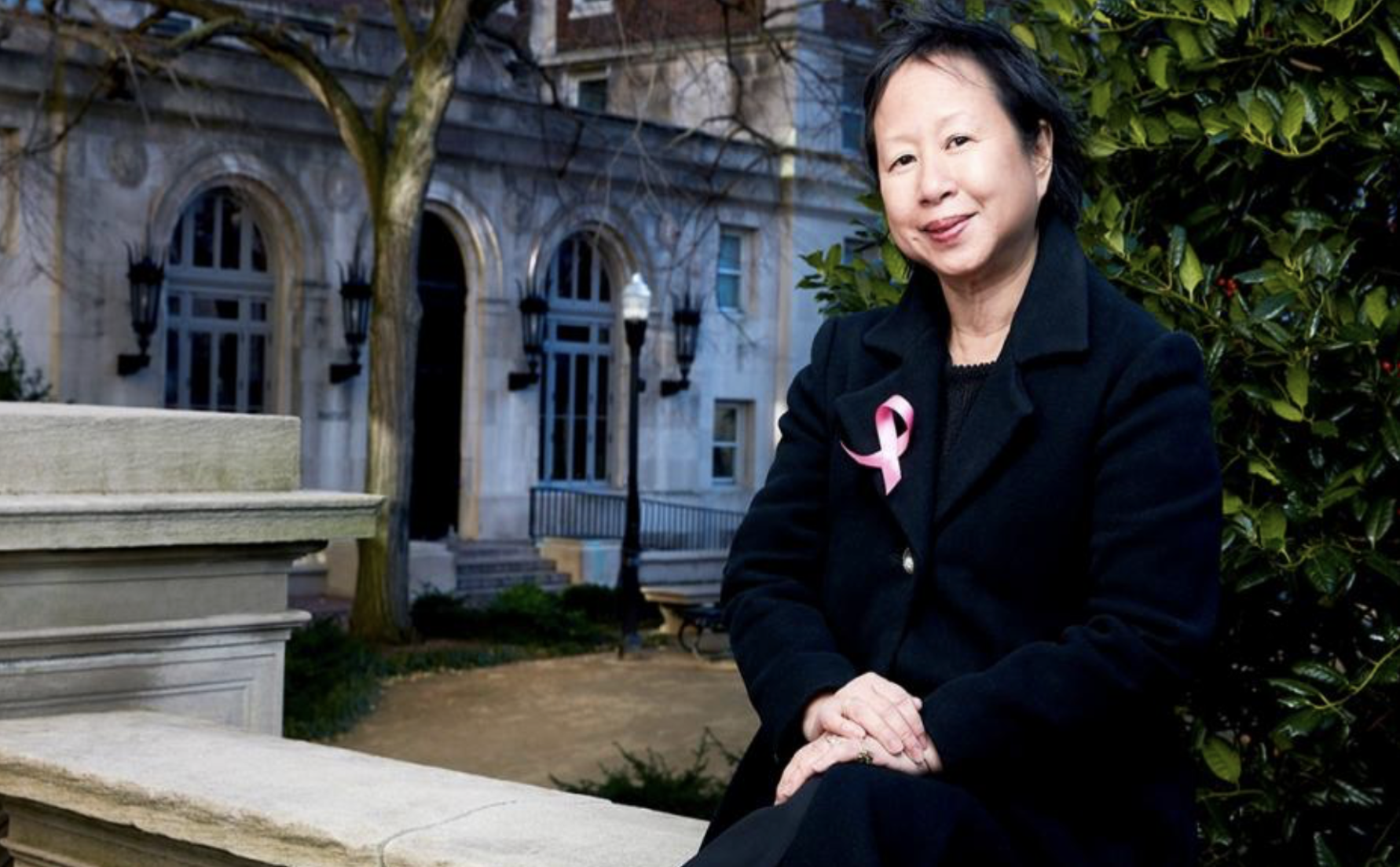
Photo courtesy of the AARP Public Policy Institute
Amid a campus climate of fear and uncertainty due to ICE detainments of Columbia community members, Elizabeth OuYang provides a professor's perspective, illustrating the profound educational impact that these arrests have had and will continue to have on the Columbia community.
Zoe Kothandaraman (ZK): Ms. OuYang, you’ve had such an expansive career in civil rights and immigrant advocacy. Could you walk us through your early influences and what shaped your decision to pursue this path?
Elizabeth OuYang (EO): As a daughter of immigrant parents and a US born citizen, I have seen that the privileges and rights of naturalized citizens are not always equally afforded. In addition, there are those who are not yet US citizens; this must be considered alongside the guarantees of the 14th Amendment—that all persons, not just US citizens, are entitled to equal protection under the law, and that no state shall deny any person life, liberty, or property without due process. There is a guarantee within our own Constitution that certain rights will be afforded to all people, regardless of immigration status. The pursuit of that equality, and of the guarantees of our Constitution, motivates me to do this work.
ZK: In light of the recent detainment of a Columbia student, do you think that the Columbia administration is doing enough to sufficiently protect the student body against attacks by The Department of Homeland Security (DHS) and US Immigration and Customs Enforcement (ICE).
EO: I think it’s important for the University to form strong coalitions with other universities and colleges like they did with Deferred Action for Childhood Arrivals (DACA); Columbia University was out front, working with Members of Congress to ensure that DACA not be terminated. I would like for the university to be as vigilant as they were with DACA in the current environment of ICE raids and arrests.
ZK: We’ve had other detainments of Columbia students, including Mohsen Mahdawi, Mahmoud Khalil, and Yunseo Chung. Have you noticed any changes in the University’s approach to dealing with these detainments compared to the most recent one?
EO: The University responded quickly to the most recent one. I think they got critical parties to react so that the recent student was released [as soon as possible]. Any amount of time in detention is
impactful, and the degree to which that was lessened dramatically this time is important.
ZK: In the 2000s you were appointed to the Clinton administration’s US Commission on Civil Rights. How does that experience shape the way in which you view the administration’s approach to immigration enforcement?
EO: I’ve had experience with other administrations and the policy was equal as far as balancing reuniting families, and immigration enforcement. What we’ve seen over the past decade or so has been an unequal balance and more energy being put into enforcement rather than family reunification.
ZK: The administration’s recent immigration policies have left our student body, more specifically, our undocumented DACA recipient and international students, in extreme fear. I remember you speaking about one of your students whose mother couldn’t come to Columbia despite desperately wanting to do something as simple as fixing her bed. Are there any other specific moments that you’ve experienced that illustrate the true scope of the impact that these new policies are having?
EO: Sure, I’ve had students who’ve had to drop my course because a family member was arrested and detained and sent to a different state, requiring my student to travel to be with their loved one. I’ve had situations with students at NYU where students were extremely distracted because of what was happening, because they came from a mixed-status family, and were concerned about needing to move, and move quickly during my students enrollment, which was very unsettling. I’ve had students applying for naturalization and being concerned about questions that they would not be concerned about previously, because they were at Columbia and the interviewing officer would ask about their role or participation in events at Columbia, concerns that would not have been an issue before. It used to be that they would renew their DACA every couple of years and continue with their studies, but now there is less certainty. I’ve seen great disruption to my students’ studies, their concentration and their emotional health, and it is just concerning.
ZK: Have you seen a difference in your students at NYU versus Columbia?
EO: Both student bodies are impacted by the administration’s policies, but I do see more guardedness with respect to Columbia students, and concerns about retaliation for exercising their First Amendment rights.
ZK: Do you think that this is largely disrupting Columbia’s educational mission?
EO: I do because I pride myself in my teaching. At the Center for the Study of Ethnicity and Race (CSER), we teach our students to be analytical, to peel away at the onion, to get at the core reasons of why things are happening. I think that’s a mark of a very strong Columbia student, to be able to parse through and make those distinctions, make those comparisons, be able to do that analysis. And when students feel that they can’t talk about or do certain things, it impedes on robust discussion. Ultimately, my main concern is civic participation; that the fear of speaking out, not only in terms of protests or even acts of civil disobedience, has impacted willingness to participate in non-controversial forms of civic participation. [For instance,] being scared to write their Senator or their elected representative on their position on an issue, things that are just general hallmarks of participatory democracy.
ZK: If the situation with DHS agents on campus devolves further, how do you recommend the Columbia community at large fights against the increasingly detrimental effects that these detainments are having?
EO: Columbia needs to stand in unity, both with institutions of learning locally as well as on both federal, state and local levels. Certain areas should be off limits to immigration enforcement, like places of worship, schools, and hospitals. I would like to see Columbia more visible in showing their support for legislation like the New York for All Act, I would like to see Columbia more visible in demanding accountability for ICE before they’re funded, that’s imperative. Right now, our government is in a partial shutdown because of a budget that wants to allocate an additional 10 million for ICE. Seeing Columbia more visible in demanding that accountability would help give students at Columbia more confidence in their institution, as well as more support that they need from all of us here at Columbia.
ZK: As an ending remark, many students are scared and unsure of what’s to come. Do you have any last words for our readers?
EO: To everybody at Columbia: if you care about the democracy, if you care about
giving teeth to our Constitution, then I think it’s important for all of us to step up, to require accountability, to require honesty, dialogue, and transparency and I think that’s basic.
Zoe Kothandaraman is a sophomore at Barnard College majoring in Political Science with a minor in Modern Greek.