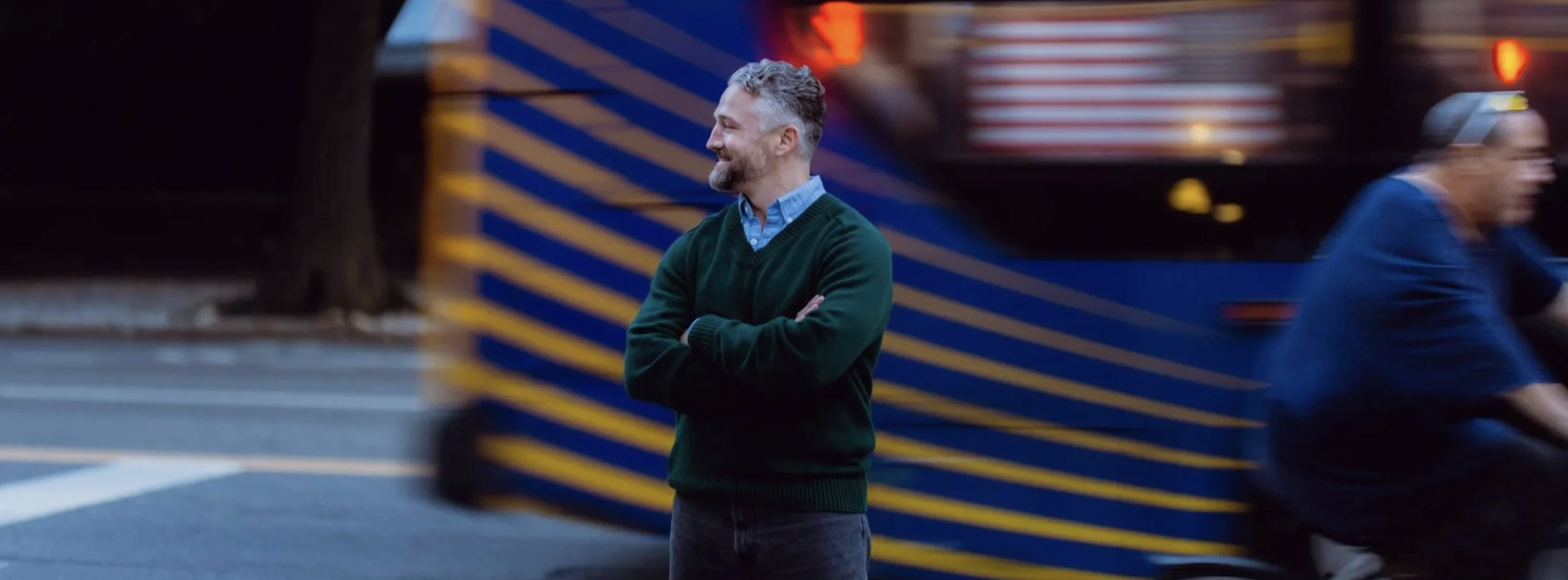
Photo courtsey Eli for NY
Eli Northrup is a public defender and advocate who served as a policy defender for the criminal defense practice at the Bronx Defenders, a public defender nonprofit that is dedicated to providing holistic legal services to indigent residents of the Bronx. He has been a key part of the fight to legalize adult cannabis use in New York State and sits on the board of the New York State Association of Criminal Defense Lawyers. Northrup is currently running for New York State Assembly in District 69. In this interview, which took place on March 6, 2026 with Staff Correspondent Anagha Menon, Northrup reflects on his career as a public defender, his stance on issues concerning the district, and his hopes for his campaign and the future of progressive values in New York and beyond.
Anagha Menon (AM): You’re running to represent Assembly District 69, which largely covers the Upper West Side. You have a very long history in the legal and political space as an advocate, a community leader, public defender, and resident of the district. Based on your experiences and your knowledge, what do you consider some of the biggest challenges facing the Upper West Side today?
Eli Northrup (EN): I would put it into three categories. The first feels like the most urgent and essential, and it’s not just facing the Upper West Side. It’s really facing our entire country and our city, and that’s threats against us from the federal government that are dismantling our constitutional rights, targeting our immigrant neighbors, and taking away our funding. I think the number one thing that the West Side needs is a fighter: somebody who will stand up to the Trump administration, somebody who will fight back and defend. My whole career has been defending against government overreach and constitutional rights, so I feel equipped to do that.
The second bucket of things that are really important for this city as a whole, and especially our neighborhood, is affordability and making sure people, especially young families, can afford to stay in the city. The workers that keep the city running—the public defenders, the social workers, the nurses, the firefighters, the people that make the city run—need to have a hand in running the city and need to be able to live here. If we don’t have things like affordable housing, universal health care, and child care, it won’t be possible for working people to live in the city and survive here, so I want to work on that.
The third thing I would put into the category is quality of life issues. I think of the scaffolding that is all over West End Avenue, the empty storefronts on Broadway—over 50 of them—between 80th and 123rd street in the district. There are policy solutions that could expedite the removal of scaffolding to fill those storefronts, address noise pollution, and things like that. I want to work on those because those little, maybe more minor things become big things when you’re encountering them every single day.
AM: In 2024, you ran a first-time campaign for the assembly seat in District 69 as a public defender and were beaten in the Democratic primary by Micah Lasher. Recently, the election of progressive Mayor Zohran Mamdani in New York City has signified a shift in political attitudes in the city. With new endorsements of the Working Families Party, Tenants PAC, United Auto Workers Region 9A, and several other groups, what’s different about your campaign this time around?
EN: All those groups who endorsed me last time around gave me a real sense of credibility and the ability to run a strong campaign. I did not come from electoral politics. I was a public defender and an advocate. I finished second place in a field of five and I mounted a really strong campaign. I think since that time, I haven’t changed any of my politics or my policies. The politics of the city have moved toward me. I feel strongly that the things that I care about and that I’ve been fighting for my whole career are things that other people in this neighborhood care about.
I also think that I’m a better candidate than I was two years ago. [Last] run, I learned a lot about the neighborhood and the different organizations and people here. I got to meet them. They got to know me. After I lost, I continued to stay involved and plugged into local politics. I did that because I care and because I wanted to advocate for the things I cared about, regardless of whether I was an elected official. I think that’s enabled me to be connected in a way that I wasn't when I ran the first time.
Also, I’ve been able to build a really strong team because people see me now as a credible leader. I had to prove that the first time, and it’s not typical that you get to run two years after for an open seat after there was just an open seat. It doesn’t happen that frequently. I’ve been able to pick up this campaign where I left off my last campaign, and I feel grateful to have been able to do that. It means I have people that support me, who are ready to come out again, and who were excited about it from the very beginning, rather than having to start from scratch.
AM: What would you say specifically inspired you to run again, and more generally what inspired you to run in this political moment?
EN: After I lost the last race, I went back to Bronx Defenders. I love my job. I love being a public defender. I’ve loved working for the organization. I know I can make a difference. I really value it. It’s a difficult job, but fulfilling. I wasn’t necessarily thinking about running again, but a couple things happened. First of all, last summer with the mayoral race, watching young progressive people pay attention to local politics and really feel like part of it, and seeing the things that I cared about be elevated and be supported—that inspired me. I was out campaigning and getting myself involved in that race and other races.
Then, there was also the fact that there was an open seat again, and it just felt like I had unfinished business. I wasn’t looking to just run for anything, but it was the fact that the same seat I ran for two years ago was open again. I feel like the people that are running this time around are people that are ascendant in power. This new movement on the left is something that I feel a part of and I want to be a part of.I think there are really good, smart, young, progressive people that can move the needle and change the dynamics in Albany. That’s something that excites me, and that’s where I can make a difference.
The last thing is with Trump, and the threats he is imposing across our country. Specifically in New York state, the local leaders and the state leadership are where we can push back. It’s kind of like our line of defense. It feels urgent and necessary to have good, smart people fighting back. I feel like I can be useful.
AM: I want to shift to your career. As a long time public defender and legal advocate, you’ve handled misdemeanor and felony cases in Washington DC Superior Court, interned as a public defender in Harlem, the Bronx, New Orleans, and DC, and in 2015 joined the Bronx Defenders as a part of the Policy Team. How does your background in criminal justice impact your ambitions for running for office and creating effective policy?
EN: What brought me into politics is wanting to see systemic change because I witnessed inequity in criminal court. Anybody who goes and spends any time in a criminal courtroom in this country will recognize that inequity. I saw it very clearly when I was in law school and it motivated me to do the work I’ve done. I started going up to Albany because of the inequity that I saw in our cannabis laws. When I started practicing in the Bronx in 2015, the number one kind of case I handled was low level marijuana. Even though people weren't going to jail at that time, people were getting separated from their families, losing their jobs, their housing, and being deported. Despite the fact that usage rates were equal across races, 90% of the people being arrested were black and brown. In the South Bronx, everybody I represented was black and brown and I knew people in the prosecutor’s office that were smoking cannabis and not suffering consequences. I went up to Albany to advocate for changes to those laws because I felt like there was such an inequity.
I started to see how Albany functioned and how they were constantly legislating on criminal justice issues, but they didn’t really have expertise in those areas. It made me want to go back, and I became an advocate, expert, and counsel to many people up there on criminal justice issues. I worked on bail reform and discovery reform. I wrote laws. I saw them passed, and I saw them implemented. I saw how they impacted my clients’ lives, and I started to realize that it’s the people up there writing the laws that can change things in New York State. I felt like I started to understand how these laws got written. I understand how to build coalitions to see them get passed, and it motivated me to want to get involved in more systemic change.
It all stems from my work as a public defender, and I don’t think there’ll ever be a harder, more difficult, more impactful job that I’ll ever do than being a public defender. I have so much respect for people doing that work, and it’s always how I’ll identify. My skills, relationships, and ability to communicate and think on my feet all come from putting myself out there and doing a really, really hard job in politics. The worst thing that can happen in a political race is I lose. As a public defender, people’s lives are on the line, so it really gives me a valuable perspective. I hope a lot more people with the background that I have will run for office because I think that those sorts of experiences can really inform somebody’s politics in an advantageous way.
AM: More specifically in your career, you’ve had to travel to Rikers several times to visit the people you represent. Rikers is a 413 acre Prison Island containing the largest jail in the city that has a reputation for violence, physical and mental abuse, and neglect of inmates. There’s long been a push to close Rikers with the City Council in 2019 passing an $8 million plan to close it by this year. What’s your opinion on closing Rikers and the borough based jails plan set to place it?
EN: I’ve been to Rikers probably 100 times, and it’s an absolute travesty that it still exists in our city in this day and age. Every time I leave there, I can’t believe that this place exists in New York City. It’s dystopian and it is inhumane, and it makes us all less safe than any individual that spends time there. Most of the people on Rikers are waiting for their trial. It’s pre-trial detention. It’s a jail. It’s not a prison, so there are people that can’t afford to pay bail and are waiting for trial. There’s a high level of anxiety about the fact that it’s on this island in between the Bronx and Queens and is almost totally inaccessible. It takes a full day even for a counsel to go out there and visit somebody. People are separated from their family and legal support, and they’re in constant danger.
The vast majority of people come back into our community after being there for a relatively short period of time, and they’re totally destabilized by having spent time there. It’s a public health hazard for all of us, it’s a community safety hazard, and it 100% needs to close. I don’t think it’s the best use of our money to spend billions and billions of dollars on jails. It’s not the best use of society’s money. It would much be better spent on stable housing, medical care, jobs, education, and things that prevent people from getting involved in the criminal legal system in the first place. However, I don’t think we’re at a point where New York is not going to house some amount of people in jails, and so I’m for closing Rikers as soon as possible. I’m not in favor of building other jails. I think that’s what’s going to happen, but we need to close it immediately.
AM: We’ve touched on your background in criminal justice and working in public defense. How do you plan to work on increasing safety in the district while also protecting individuals from unfair policing?
EN: I think I’m really an expert in public safety because I’ve spent over a decade representing people in court who are charged with crimes and dealing with mental health issues and substance abuse. These are people who I have long standing relationships with; I see them as humans and understand them. What I have seen work to break people from a cycle in and out of the criminal legal system is stable and supportive housing first. That is the thing that I’ve seen time and time again put people on a path to stability. Especially for people that struggle with mental health issues, having a counselor, or somebody on site and affordable housing changes the trajectory of their lives. These aren’t just abstract—these are people that text me, check in with me, and are so proud when they’ve achieved stability. That’s a huge thing.
Union jobs too—people who get into apprenticeships and union jobs get stability. It’s a pathway to the middle class. Those are things that I think we need to invest in.
I also am a big proponent of the mayor’s plan to have a Department of Community Safety to take police out of calls for mental health distress, people decompensating, and things that really need a mental health response or a response of de-escalation. Police don’t need to deal with that, and that can let police focus on things that prevent crime in the first place. Those are the kind of things that I would focus on—more pathways to stability. If somebody is homeless, it means getting them connected to shelter systems, stable housing, and mental health resources in a way that’s less carceral. Unfortunately, when police respond to something, they basically only have a couple tools and arrest is the main one. That’s just their function. We need to think about this in a different way. I think we will achieve safety more readily than how we’ve done it for many years, which is focusing on incarceration.
AM: We talked a little bit earlier about your experience in Albany seeing policy and how to carry it out. You were a key part of the fight to legalize adult use of cannabis in the state. You served as director of the Bronx Cannabis Hub after witnessing people’s lives completely altered due to minor marijuana convictions. This fight brought about statewide policy change and represented a major victory for marginalized communities against racist drug sentencing. Do you plan to continue the fight for policy that benefits marginalized communities as an assembly member?
EN: I’m no longer the director in the Bronx Cannabis Hub. We have a great new director. He’s been there now almost a year, Damien Fagan, who used to be the Chief Equity Officer for the Office of Cannabis Management. I was instrumental in launching the Bronx Cannabis Hub, and it’s a project that’s near and dear to my heart. I realized when we were writing the law that there was racist policing for decades, and it wasn’t enough just to legalize cannabis and ignore the harm that had been done. We really needed to repair that harm.
The MRTA [The Marihuana Regulation & Taxation Act], the bill that legalized cannabis, had three prongs to do that. One was to automatically expunge past convictions for cannabis. The second was to dedicate 40% of the tax revenue from cannabis sales, which was $2 billion last year, to communities that were disproportionately impacted by cannabis policing. The third was priority in licensing. I started to realize when the licensing part came around that unless you were going to support people who had been arrested and prosecuted, they weren’t going to have access to this market, so we launched the hub to provide pro bono legal support. We helped to get individuals who had been previously targeted to the point where they could open up stores and apply for licenses. I have to say, I’ve met some of the most amazing, gritty entrepreneurs in that process, and I’m so proud of the cohort from the hub. We already have 15 open dispensaries in New York. One of my close friends that I met through this process is about to open in my district—the district I’m running in—on 94th and Columbus, and that’s going to open at the beginning of April. All these individuals who had been previously targeted have overcome that and are now going to have a real chance to thrive in this new industry.
It’s about implementation of bills. You can write whatever social equity you want, but if you don’t work to get it passed and support it, it’s just words on a page. It’s nice, but this is the attitude I’ll bring as a legislator: I want to see things through. I don’t just care about scoring political points. If I win but I don’t pass anything, I’m not effective. If I win and I pass bills, but they’re not implemented correctly, I’m not effective. You need to implement things with a focus on marginalized people that have been disproportionately impacted, or people who don’t have a voice. I don’t feel like I’m being a success. I mean, my career in policy has been trying to give voice to individuals who don’t have political power in the criminal legal system, which is really the many. A lot of people in this state and in this neighborhood don’t have political power. Really, power is concentrated at the top.
The reason I want to run is to advance equity and advance the voice of the many, and I think everybody benefits from that. There’s no real other reason for me to do it, rather than to bring a perspective that doesn’t currently exist.
AM: Columbia University is a big part of this district, as one of the largest private landowners in New York City and the landlord to several district residents and businesses. In an interview with City & State, when talking about Columbia you said “...they really are a neighbor to us in Morningside Heights, and they need to act like a good neighbor.” Alongside the University administration’s decision to close the gates in 2023 for entry by the community, and the subsequent rise of backlash against the University, how do you seek to ensure that Columbia lives up to its role as a “good neighbor?”
EN: We’re seeing it right now. We’re seeing it with what happened last week when a student was essentially snatched out of Columbia housing by DHS. We still don’t know exactly what happened, and still, Colombia hasn’t released the surveillance footage from that day. There are discrepancies between their version and body cam released by the NYPD earlier today. I want to give Columbia the benefit of the doubt, but they haven’t really earned it. Especially lately, I’m looking for them to be a good neighbor, but they seem to be more focused on their bottom line than they are on anything else. When the Trump administration threatens them, they seem to bend to their will. When the Morningside Heights community is upset and pushing them, they don’t. When the students feel unprotected and unsafe and unable to express themselves, there’s no recourse.
Until Columbia is a good neighbor, I will put pressure on them to do better. If that means taking a look at the tax breaks that they get from the state and the city, which is hundreds of millions of dollars, then we will if that’s what brings them to the table. It’s not enough to just hope that they do the right thing. We’re going to have to make them do the right thing. That’s what I’ve observed. Listen, I don’t even think that they have a legal right to close the campus. I know there’s a lawsuit that’s pending. I live in Morningside Heights, and it has created a fortress within our community. It’s not good for the residents of this neighborhood. It’s not good for the students. I was on campus for a forum the other day, and it’s like a ghost town in there. There’s this big divide that doesn’t benefit anybody, and I’m going to continue fighting until we see some sort of change in Columbia’s behavior.
AM: Columbia University is a 501(c)(3) nonprofit with tax exemption in New York State. In 2024, seven bills were introduced to the New York State legislature to reduce or withdraw Columbia University’s tax exemptions, but all failed to pass. What is your opinion on limiting or removing these exemptions on universities like Columbia to curtail harmful expansion and ensure accountability?
EN: I think there will be an appetite for it in the legislature, if Columbia continues to act in the manner that it has and disregards the will of the community. I have said that I would co-sponsor the Repair Act. It funds CUNY too. It’s not just something that takes away from NYU and Columbia, and I’m an NYU alum and value the institution, but we need to think about equitable distribution. When you have two of the largest landowners in the entire city, you have to question whether these tax breaks make sense in the way that they do for other nonprofits. I think all options have to be on the table. I think that it requires building coalitions at the state level to pass bills and prioritize them, but certainly if the local officials are in favor of it there, that goes a long way in seeing whether it totally makes sense.
AM: Finally, this is a very diverse district. It’s one with so many young people, so many progressives, but also a very large political spectrum of people of all different identities and backgrounds. Do you have a final message about your campaign or your mission that you’d like to share to the people in your district?
EN: I love this community. I love it because of its diversity. I think people from all walks of life find themselves in the 69th district. Manhattan Valley, the Upper West Side, the Bloomingdale area, the Columbia Morningside Heights area—they’re all a little bit distinct and bring a different flavor. I feel like I sit right at the center of those different communities, and it’s why I’ve chosen to make my home here and why I love it here.
I think there’s a real lefty spirit that underlies it. It’s even different from lower on the Upper West Side up here. I think people care deeply about equity. People care about the parks and the environment, and I think people really love the diversity and the youthful spirit that the students bring. What I can bring to this role is the integrity that I have brought throughout my entire career. I’ve lived my values. You can trust that I am what I say I am because I’ve demonstrated it, and I will be ready to go on day one as a legislator. I’ve spent seven sessions in Albany, I’ve written bills, I’ve worked to get them passed, and I’ve worked to get them implemented. I know what this job entails. I won’t need on the job training. I’ll be ready to go and be effective.
This district, which is so engaged and politically motivated, deserves a legislator who can really start right off the bat and be effective for them—especially in this scary time where the federal government is coming for us. New York state is really the last line of defense and one of the states that will lead the way. My message is this: you can trust me, I will fight for you, and I hope you’ll support me.
The ongoing political climate in the United States and beyond, leaves many around the world with a sense of uncertainty, even hopelessness. In a moment where there feels as though there is no solution and we are left unsure, frustrated, or downcast, Eli Northrup reminds us that we can make moves towards progress. Anyone has the power to help fight back against injustice and the next few years have all the potential to decide our fate.
In the end, Northrup gives us a simple solution: fight for what is right, realize that we do not have to accept the world in which we live, we can change it. Whether or not we do, will determine our future.
Anagha Menon (CC ‘29) is a Staff Correspondent at CPR studying History.