
Flip Phones and Capitalism
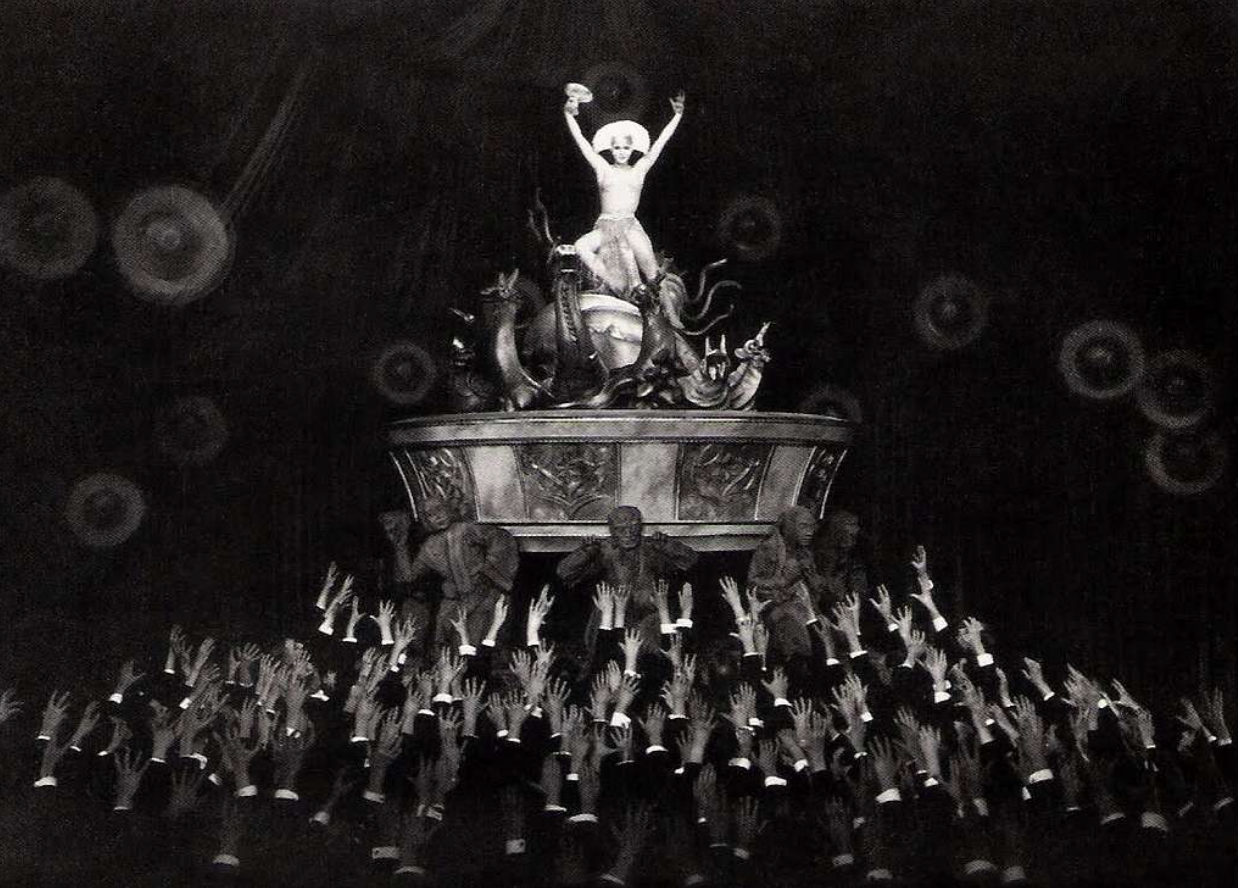
Set photograph from Metropolis, a 1927 German expressionist science-fiction silent film directed by Fritz Lang (1890–1976). Photo by Horst Von Harbou.
I.
There are very few ideas in our language named after figures whose historical existence remains uncertain. Even religious doctrines conceal their mythologism by abstracting narrative figures into systematic and universal titles. The title of “Christ” predates Christianity itself, coming from the Greek “Christos” (Χριστός), which means the “anointed one.” In a literal sense, Christian-ity means the followers of the chosen one. Similarly, the word “Islam” has its origins in the word “salama” (سلم), which meant “submission” in ancient Arabic. By the same token, we see the Robin Hoodists of our generation refer to themselves as socialists, even if they have nothing to do with socialism.
Luddism is one exception. The word “Luddism” comes from a number of 18th-century anecdotes from Leicestershire about a boy called Ned Ludd (or Edward Ludlam) who allegedly tore apart knitting frames in protest of the perceived replacement of manual labour with capital. Written and historical records of him are mostly limited to rare Luddite letters and proclamations that were signed as “King Ludd,” or his secular counterpart, “General Ludd.” That the perceived epitome of Luddism (an individual whose accumulated resentment against the capital becomes his casus belli) is itself mythological says a great deal about the self-seriousness of Luddism as an ideology.Even Marx, who admittedly shared a common interest in the study of political economy with the Luddites, did not think it a worthwhile investment to partake in criticism of Luddism. He devoted only one paragraph in Capital Volume 1 to it:
"The struggle between the capitalist and the wage-worker dates from the very origin of industrial capital, and it raged throughout the period of manufacture. But only since the introduction of machinery has the workman attacked the instrument of labor. He rebels against this particular form of the instrument, which, in his eyes, is only a formidable enemy. It took both time and experience before the work people learnt to distinguish between machinery and its employment by capital, and to direct their attacks, not against the material instruments of production, but against the mode in which they are used."
Marx, in his beautifully dry and scornful tone, understands Luddism as a symptomatic and necessary reaction to the development of capitalism, rather than as an ideology in itself. For Marx, any self-serious ideology concerns itself with the political instrumentalization of labor and capital (which itself is a mere form of labor that has crystallised into an object form), rather than attempting to reject what essentially exists in the realm of historical necessity.This may hold true, even for our neo-Luddite friends off and on campus. To what extent can the neo-Luddites of our day “oppose” the agency of technology, if this opposition can only consist of ordering “world’s smartest dumb phone” for the stunning price of only $399 because it has Spotify but not TikTok? Under the immanent and perpetual accumulation of capital, it gets harder and harder every day to be as authentic as Father Ludd.
II.
To try to understand the neo-Luddite movement through the lens of Luddism as a historical movement would be anachronistic, however. The only other feature they effectively share is my sincere antipathies.
In the past, I took the initiative to attend (with the aid of my apparent abundance of spare time) what has been referred to as the “S.H.I.T.P.H.O.N.E conferences,” organized by “Lamp Club,” the self-professed radical branch of the neo-Luddite movement in New York City. The conferences I attended involved a number of Gen Z college students and some two Boomer hippies who would come together to read poetry in the park, wear gnome hats, and conclude their meetings by breaking old phones. I remember vividly that some name-dropping occurred at the conferences, couched in Marxist language, with incoherent references to capitalism and the neo-liberal order, whatever those mean. Unfortunately, it never seemed to exceed the level of the kind of Žižek-adjacent rhetoric your ex probably indulged in.
Due to the political unseriousness of the neo-luddites, I did not intend to write about them until very recently. In December, CPR writer and comrade neo-Luddite Preston Parker reported on the group from a decidedly political angle, describing the movement as a “path to political optimism by seeking to rediscover the fundamentals of human interaction.” Parker, whom I had the privilege of meeting at a S.H.I.T.P.H.O.N.E conference, was to help establish the neo-Luddite movement on campus. Later, I was completely baffled when I read the Blue and White interview with Ned Ludd 1 and Ned Ludd 9. According to the Ludds, the neo-Luddites had a political manifesto which contained their own critique of political economy and a “plan of action.”
Looking at the interview reveals an important comparison. The original Luddites were opposed to the use of technological means of production only in relation to wages and job security. They were in many ways a labor movement, and they were generally uninterested in a romanticized vision of men in its natural state. In this sense, the neo-Luddites are far more Amish than the original Luddites. It is evident in the interview that neo-Luddites (or nepo-Luddites, if you may), being the petty-bourgeois students that they are, do not concern themselves with the organization of the means of production, but simply with its corresponding social relations; namely, the admittedly alluring bourgeois conception of authentic personhood, and matters of sociability. It is no wonder that the theorists of neo-Luddism constantly speak of “alienation” but not “estrangement.”
III.
The neo-Luddite insistence upon its politicism, despite the obvious fact that its critique of society is predicated upon the personal-social realm as opposed to the political-economic, raises a question that is fundamental to contemporary politics, namely, the question of the separation of the personal and the political.
For Marx, the separation as such symbolizes one of the greatest accomplishments of the politically emancipated nation-states in the aftermath of the European Enlightenment. At the same time, it constitutes the structural limit of emancipation under the given political state.
Our generation has come to know of this separation through its alleged afterlife via the ideological maneuver of the second-wave feminists with the slogan “the personal is political:” which from the point of Marxism, attempts to override the contradiction that is symptomatic of and constantly reproduced by capitalism by enforcing the false identity of objects: by saying that they are the same. This is in fact a form of fetishism, whereby historically and socially mediated contradictions within capitalism, in this case, that of the separation of the public-private realms, is understood as a matter of identity equivalence.
As Marxists, if we must understand the divide of the personal and political realms as a symptom of the crisis of capitalism, we must also understand any rejection of this divide on ideological basis as another symptom of this crisis. Capitalism, within itself, immanently produces its own opposition.
When I directed the question of the personal and the political to my friend Addie, a self-described neo-Luddite, in a WKCR interview in March, she expressed her concerns about politics becoming apathetic when it becomes too absorbed in itself: “[Politics] doesn’t feel human anymore. It doesn’t feel like a personal issue. You can talk about all sorts of ‘campaigns,’ and you can talk about them as ‘campaigns,’ and that could be alienating to people…These in-person, weird, silly, open, inclusive events [that neo-Luddites organize] are how we are going to win anything; by making it fun to be on campus; making it something people want to fight for.” She added: “I am so interested in merging those two identities [the personal and political]. I think they can interact in a beautiful way.”
Interestingly, a political understanding of neo-Luddism reveals that it has very little to do with technology. Technology seems to be only one of the many obstacles the contemporary world has brought upon itself, which makes it hard to form personal relationships, a feeling of belonging, and, more significantly, a sense of radical agency. Neo-Luddism, just as the demand to combine the political with personal, is in fact a demand for a radical form of politics that has been absent from our political epoch for the past 178 years (that is, since 1848).
Another thing to reflect upon is the general shortcomings of our political moment. The question of whether neo-Luddism is a lifestyle or a political orientation can be asked of all forms of political action we engage in today. How much of your Amazon boycott desires a political end, and how much of it is an ego reaction to your personal irrelevance?
Functionally, however, the political and personal realms remain separate under conditions of capitalism. Your tears well-spent on Boromir’s death scene in The Lord of the Rings: Fellowship of the Ring Extended Edition, when he tells Aragorn, beneath his breath, “I would’ve followed you, my brother. My captain. My king,” probably does not mean that you will vote in favour of the divine right in the coming election.
The main reason for this, at least for Marx, is very simple. The Third Estate in the 18th-century; its 19th-century successor, the proletariat; and its alleged 21st-century successor, the neo-Luddite movement, did not have agency over their own movements, let alone over society at large. Within the crisis of capitalism, all of our freedoms appear contradictory and insufficient. To Marx, both the then-contemporary and now-contemporary thinkers severely overestimate the extent to which the individual can transform political reality through their personal contributions, which in fact points to the necessity of the revolutionary project. The task of the revolutionary project is to free society and make the personal the political, or in Marx’s iterations, make “philosophy realize itself,” make philosophy a matter of practice, so that ideas may freely transform the world, and so that our neo-Luddite friends can freely partake in their public neuroticisms.
Whether such a project is feasible or not is in fact not a “scholastic question,” it is a very practical one. It remains to be answered by the generations to come. Much luck to us.
One thing is for certain. There is nothing more Columbiaesque than splitting your MacBook Airs in half and believing that somewhere there lies a political metaphor.
Yunus Akdal GS ‘26 is a political science student and a critical theory enthusiast.