Into the Abyss: Paralysis, Fragmentation, and Asymmetry in the World Trade Organization
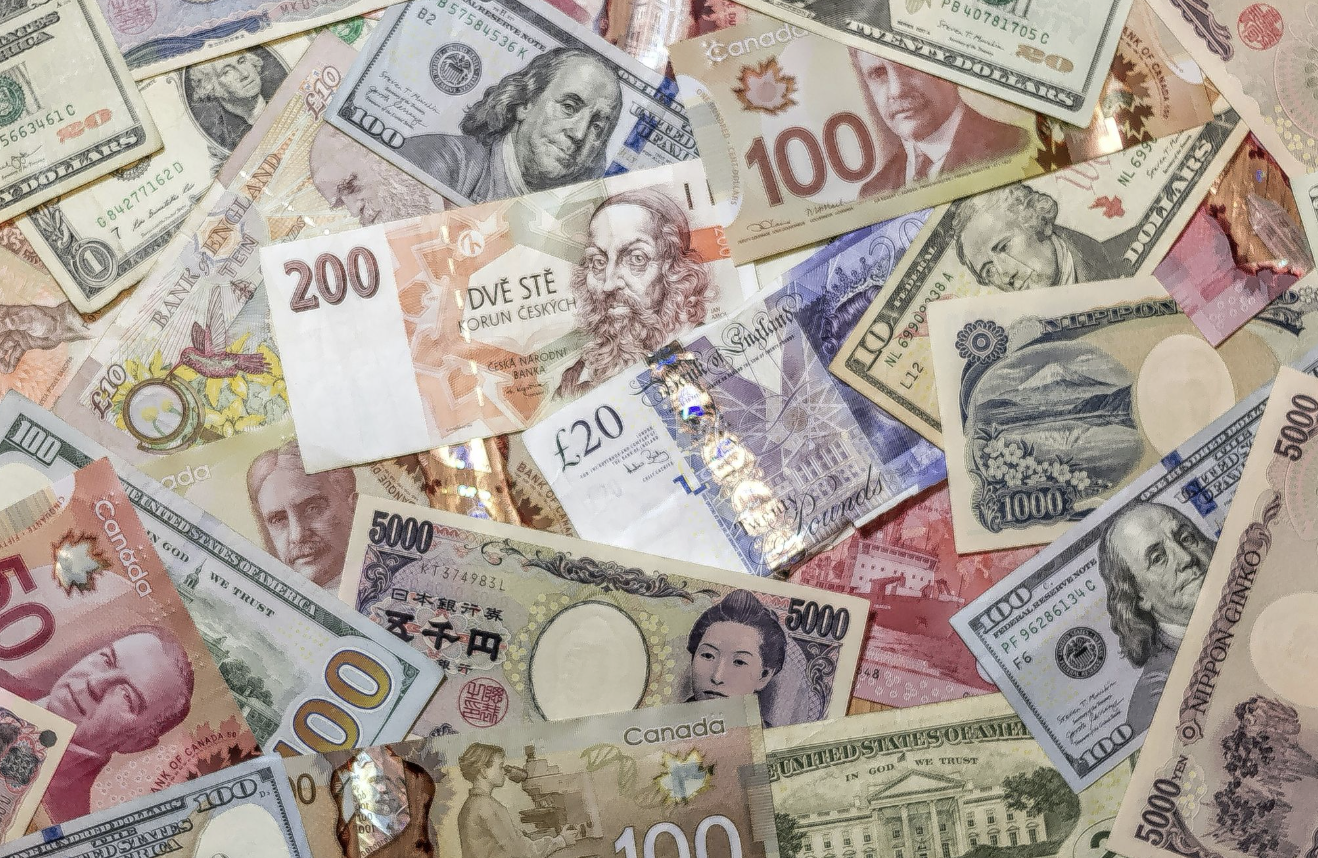
“Chaotic pile of various international banknotes.” Photo courtesy of John McArthur via Unsplash, 2026.
Into the Abyss: Paralysis, Fragmentation, and Asymmetry in the World Trade Organization
Standing at the World Trade Organization (WTO) in 1998, President Clinton remarked that “with its insistence on rules that are fair and open, the WTO plays a powerful role toward open and accountable government.” Clinton’s remarks, delivered three years after the creation of the WTO, signaled a promise towards an international trade system premised upon cooperation, accountability, and a rules-based order. Yet, this promise would be put into question less than 30 years later. In November of 2020, the term of the last remaining member of the WTO’s top court, Dr. Hong Zhao, came to an end. As Dr. Zhao stated in her departing speech, the court will “be an entity that exists only in Treaty… the WTO’s existential crisis is looming.” However, Dr. Zhao’s exit was not one of her own choice––it was rather the result of cumulative and deliberate action taken by the United States to erode, hollow out, and ultimately paralyze the WTO’s dispute resolution system.
Dispute Settlement: The WTO’s ‘Crown Jewel’
When the WTO was founded in 1995, the 123 signatories to the Marrakesh Agreement committed themselves to an institution capable of establishing an open, rules-based trading system. The WTO’s General Agreement on Tariffs and Trade (GATT) cements the core principles of international trade, including a non-discrimination clause and the prohibition on unilaterally increasing duties. Furthermore, it is the dispute settlement system which the WTO acknowledges as “the jewel in [its] Crown” that “is the central pillar of multilateral trading.” Pursuant to the WTO’s Understanding on Rules & Procedures Governing the Settlement of Disputes (DSU), countries can bring forth a dispute before a panel of independent experts. If the panel’s decision is contested, it can be appealed to the Appellate Body. As the WTO’s highest and final court of appeal, the Appellate Body issues final, binding judgments concerning compliance with WTO rules. As a tool that could be utilized by all members, the Appellate Body thus embodied the WTO’s aspiration towards an open, rules-based, and co-operative system of trade.
Cultivating a Legal Abyss
The Appellate Body’s dismantling was not accidental, but rather, an exploitation of key structural and consensus vulnerabilities present in the WTO’s framework. Pursuant to Article 2.4 of the DSU, decisions must be made “by consensus.” Yet, this requirement, in aiming to preserve co-operation and unity, also embeds vulnerability, as a single country can withhold its agreement to block a consensus and hence any decision from being adopted. The Appellate Body’s gradual dismantling, primarily through incremental efforts by the United States, illustrates how the Article 2.4 consensus vulnerability was exploited to paralyze dispute settlement. Beginning in 2016, the United States continuously blocked appointments of new members. In 2019, these efforts culminated in a paralyzed Appellate Body as the court no longer had the required minimum of three members to issue a ruling. By 2020, the final member’s term had expired.
Ultimately, the United States’s erosion of the WTO’s Appellate Body represents a broader contestation and challenge to the rules-based international order. This puts into question the durability of international accountability, co-operation, and cohesion. By voicing opposition to Appellate Body candidates and preventing consensus, the United States has capitalized on the WTO’s governing framework to erode one of its essential components, using its own rules against it. This has resulted in a legal abyss. If a country disagrees with a panel’s results, it can only appeal to an Appellate Body incapable of issuing a final decision. By appealing a case into this ‘void,’ the decision is indefinitely delayed, enabling potential violations of international law to persist.
Initial Enthusiasm to Fading Legitimacy
Firstly, the crippling of the Appellate Body represents a challenge to the rules-based international order when considering how international constraints, perceived as lacking utility and legitimacy, can be re-negotiated by dominant powers. This is exemplified by the United States’s shift from initial enthusiasm to its current contestation of the WTO. In 1999, the Office of the United States Trade Representative affirmed how the WTO “with its system of rules helps the United States.” Upon the WTO’s creation, the United States benefited from the promotion of market liberalization, increased consumer affordability, and new industrial production. Consequently, the United States’s initial use of the Appellate Body reflects that when an international institution and, by extension, its systems of rules, is perceived as legitimate and advantageous, the rules are upheld.
Conversely, growing American grievances against not only the Appellate Body, but also the WTO at large, illustrate the fragility of international constraint, particularly when contestation occurs across party lines. On a broader level, the United States has critiqued the WTO’s decision to allow China to maintain the status of ‘developing nation’ as it confers benefits including special access to markets and longer time to fulfill WTO’s obligations. More narrowly, the United States has challenged the legitimacy of the Appellate Body, with a 2020 report from the US Trade Representative claiming it has “[overstepped] its authority” through judicial activism. In tandem, these grievances illustrate a broader crisis of legitimacy for the WTO and its system of rules, underscoring how international constraints are especially vulnerable to challenges that persist over time, successive governments, and party lines. Importantly, while the Appellate Body officially ceased functioning during Trump’s first presidency, it was under President Obama when Appellate Body nominees were first blocked. During the Biden presidency, these blockages persisted. The bipartisan erosion of the Appellate Body is key to consider as it illustrates a broader contestation against WTO constraints enabled by successive (in)action. Ultimately, the Appellate Body’s inability to hear disputes indicates that global rules are not guaranteed, as powerful states can erode the efficacy of the systems meant to uphold them.
From Above to Within
The erosion of the WTO’s legitimacy, and with it, the Appellate Body, by the United States further challenges the rules-based order, as in the absence of international constraints, it enables a shift to domestic ones. When President Trump imposed sweeping tariffs in 2025 through executive orders, he was arguably emboldened by the Appellate Body’s dysfunctional state. Any contestations from fellow WTO members could be appealed to a hollowed-out, defunct court, incapable of rendering a decision. Consequently, the presence of a legal void on the international level has placed growing importance on domestic mechanisms of accountability. Indeed, President Trump’s tariffs were not struck down by the WTO, despite conflicting with core WTO GATT provisions, including negotiated tariffs. Rather, it was the Supreme Court that struck them down, ruling that the International Emergency Economic Powers Act that President Trump used to justify his tariffs does not authorize the President to do so.
Yet, in rendering international constraints incapable of providing accountability and thus shifting that onus towards domestic organs like the Supreme Court, constraint is still hollowed out because domestic courts are unable to enforce international WTO law. While the Supreme Court may have struck down Trump’s tariffs, its justification rested on federal law, as opposed to international law. As Congress has declared that no person may challenge any action or inaction by the United States that is inconsistent with WTO law, such (in)action cannot serve as grounds for complaints before domestic courts. Hence, while domestic constraints may exist, their scope is still limited as they cannot act as a complete substitute for international checks meant to uphold international law. Evidently, the paralysis of the Appellate Body has changed the nature of accountability. The transition from international checks and balances to domestic ones is inadequate and risks hindering accountability, as domestic substitutes remain limited in enforcing international rules.
Looking Ahead: A Fragmented Order
Perhaps most significantly, the dismantling of the WTO’s dispute mechanism is worth considering, as it has fractured global co-operation and led to an asymmetrical application of rules. This is illustrated by the growing divergence between countries that have developed alternate mechanisms to enforce international constraints and those who deliberately leverage the Appellate Body’s unenforceability of rules:
On one hand, states such as Canada, Japan, and China, as well as members of the European Union, have demonstrated how that paralysis was not an option. In 2020, they created an alternative dispute resolution system, the Multi-Party Interim Appeal Arbitration Arrangement (MPIA), which can issue binding decisions between parties who have agreed to the arrangement. In acting as a parallel but functioning court of appeals to the Appellate Body, the MPIA underscores that, for some, the rules-based order can still persist in the face of US-induced paralysis. Indeed, the MPIA serves as a potential deterrent, as its members impose fewer trade barriers on one another compared to their non-MPIA counterparts. While the United States is exempt from its authority, the MPIA has more than 50 members that comprise 57% of World Trade. Hence, by appealing their disputes to the MPIA as opposed to a dysfunctional Appellate Body, these countries have demonstrated the continuation of international accountability.
In contrast, the absence of key economies from the MPIA, including Russia, South Korea, India, Thailand, and Indonesia, highlights how the erosion of the WTO’s dispute system has ultimately fragmented the rules-based order as laws are applied asymmetrically. Indeed, rather than constraining themselves to the MPIA, some countries seek to benefit from the dysfunctional system, leveraging the legal void the United States has opened. In 2022, Indonesia appealed a case challenging its nationalist policies in the nickel sector into the void. Similarly, India blocked a panel ruling challenging its subsidies to special economic zones by appealing the ruling to the non-functioning Appellate Body. Evidently, the erosion of the Appellate Body has resulted in a stark divergence: As some countries constrain themselves to a mechanism that can enforce rules, others continue to operate in an abyss where such rules cannot be enforced. Thus, while the MPIA preserves the WTO’s core rules, its failure to capture the agreement of all states has simultaneously institutionalized a two-tier system that renders universal enforcement increasingly difficult. Ultimately, the dismantling of the WTO’s Appellate Body and emergence of divergent systems of constraint demonstrates how the nature of international accountability is being contested as rules are enforced asymmetrically.
The looming “existential crisis” that Dr. Hong Zhao warned of when departing from the Appellate Body is now here. As protectionist policies that challenge the WTO’s core principles are increasing, the WTO has planned budget cuts. As dispute resolution is needed, the WTO’s ‘crown jewel’ continues to remain defunct. The ongoing paralysis of the Appellate Body has not merely resulted in a challenge to international trade law, but also in a broader contestation with the global system of multilateral cooperation. As powerful states re-negotiate constraints and exploit procedural vulnerabilities, domestic courts insufficiently substitute international constraints, and rules are applied unevenly, accountability is being reshaped. Ultimately, this suggests that countries will be forced to navigate a fragmented, asymmetric, and uncertain global system as dispute resolution becomes decreasingly universal and increasingly fractured. While President Clinton promised a WTO capable of playing a powerful role in advancing accountable government, it seems that idea has only fallen into the abyss.
Hailing from Vancouver, Canada, Jaiden Ahuja is a staff writer interested in the relationships between geopolitical rivalry, international law, and multilateral institutions. Having been featured by The Los Angeles Times HS Insider, The Stanford Daily, ELSA International, and The Canadian League of Poets, he can be contacted at jaiden.ahuja@columbia.edu.