Policy Prevents Interference: How the International System Creates Accountability Loopholes
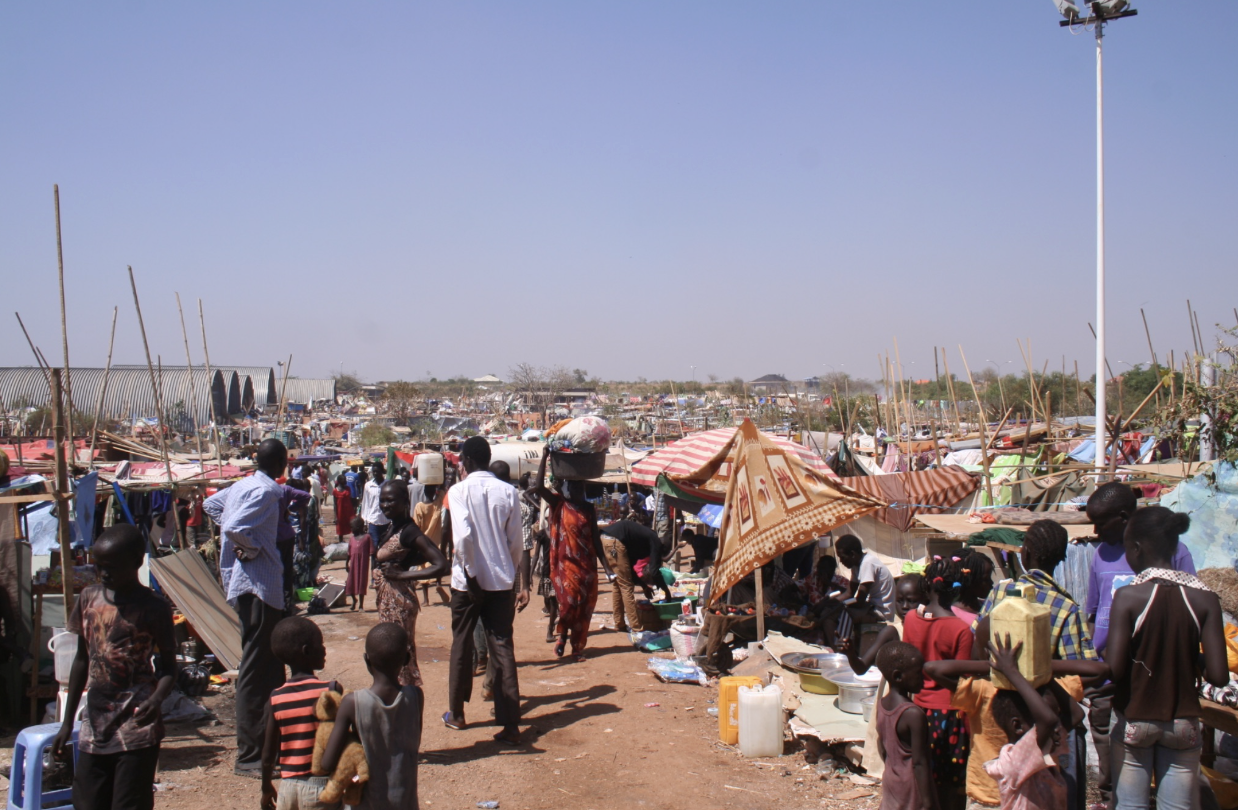
Sudanese citizens that have been displaced from their homes. Photo courtesy of the EU Civil Protection and Humanitarian Aid.
Early last year, Sudan filed a claim against the United Arab Emirates to the International Court of Justice (ICJ), accusing them of supporting the Rapid Support Forces (RSF), a Sudanese paramilitary that has committed numerous atrocities against civilians in the region. Nonetheless, the ICJ dismissed Sudan’s genocide claim, stating that the court does not have the jurisdiction to allow Sudan to sue the UAE given specific agreements regarding jurisdiction under the 1948 Genocide Convention, the first human rights treaty adopted by the United Nations (UN), officially defining genocide as an international crime under treaty law. This dismissal was in spite of the credible evidence provided by the UN of shipping weapons and arms to the RSF. However, this is not an irregular decision, instead it is the result of an international system that prioritizes state sovereignty over universal human rights. And thus, while Sudan’s humanitarian crisis continues, with over 13.6 million civilians having been displaced, and over 30 million requiring humanitarian assistance, the UAE remains unaccountable.
The limitations of the international system are not theoretical, but are the very reason for why there has been no notable intervention in Sudan’s crisis. Although there are frameworks that prioritize universal human rights such as international humanitarian law and other legal processes, the UAE’s ability to easily escape accountability reveals a structural bias where the legal immunity of the state outweighs the human rights of the individual. The UAE continues to deny accusations of its complicity, using their agreements with major treaties including the Convention on the Elimination of All Forms of Discrimination (CEDAW), Committee against Torture (CAT), and Committee on the Elimination of Racial Discrimination (CERD) as evidence of their adherence to legal norms. However, their selective agreements suggest that the country is ensuring these treaties cannot be used against them nor can they be punished for violating international law, including the 1948 Genocide Convention.
This prioritization of sovereignty over safety has notable consequences in Sudan, specifically, when the UAE has been able to bypass the UN arms embargo and security restrictions to continue sending weapons to the RSF. In early 2025, a panel of UN experts on Sudan found cargo planes that arrived at the Am Djarass airport near the Sudan border assisted in distributing weapons to the RSF and accused the UAE of being involved. The weapons have been used to target citizens, which would violate international humanitarian law governing the use of arms, and the arms embargo placed on this region by the UN nearly 20 years ago.
International law has not only failed to stop the genocide in Sudan, but has also revealed a flawed legal system that allows the UAE to maintain a proxy war and remain a respected member of the international system. The system did not fail because it lacked the rules to stop the distribution of weapons, but instead because it failed to hold a strategic partner to them.
The UAE’s non-compliance with international law is not unusual, as it has often been criticized for the way it has navigated circumstances regarding human rights across both domestic and foreign relations. The state has a documented history of repeatedly criminalizing freedoms of expression and utilizing secretive mass trials, such as the sentencing of dozens of dissidents to life in prison, to crush perceived threats to the government. This domestic suppression of human agency translates to their treatment of foreign policy regarding its involvement in Sudan’s crisis. As a state that actively undermines universal human rights and privileges, their complicity in Sudan’s crisis is not random; rather, it is a strong demonstration that their decision to exclusively agree with specific sections of the 1948 Genocide Convention was so they could act without fear of retaliation and repercussions from the international system.
Further, the UAE has not directly responded to these allegations; instead, they have silently remained one of the biggest donors of humanitarian aid to Sudan, noting their field hospital in Am Djarass as evidence of their commitment. However, this response has been challenged by findings from a panel of UN experts, which suggest that the UAE has been using this humanitarian contribution argument to mask their support for the RSF. Instead of food and medicine, they have been transporting arms and equipment that will go on to harm civilians.
The UAE has been able to benefit from a system that rewards their legal impunity, allowing them to violate international humanitarian law while Sudanese civilians continue losing their livelihood. However, a state cannot claim to be supporting humanitarian aid acts while simultaneously contributing to atrocities and genocidal actions.
The dismissal of Sudan’s claims against the UAE is more than a legal formality; rather, it is the moral and systemic failure of the international system. By allowing the UAE to hide behind jurisdictional agreements while contributing to the world’s largest humanitarian crisis, the international system has shown that wealth and influence play a strong role against the consequences of genocide. If international law remains an agreement where states can choose to opt out of accountability, then the previous human rights frameworks such as the 1948 Genocide Convention becomes ineffective for its core purpose. The nearly 14 million Sudanese civilians deserve a system that prioritizes their well-being over the UAE’s right to remain unaccountable. The international system has to stop treating human rights as an optional element, as it directly changes lives.
Gregg Collins (CC’29) is a Staff Writer for the Columbia Political Review and a student studying Human Rights and Political Science.