The New Frontier of Great Power Politics: Oceans
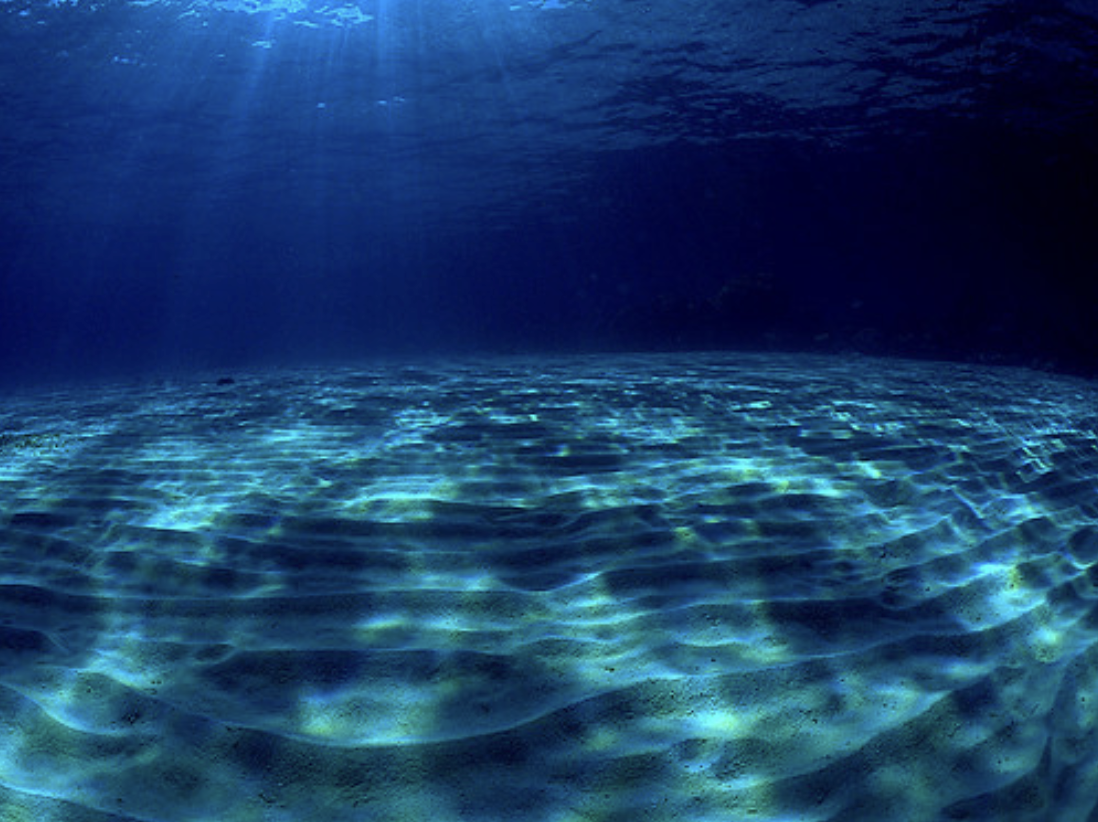
In the heart of the South Pacific Ocean, the Cook Islands are surrounded by shimmering blue waves. Below the crystal-clear water, archipelagos of coral reefs can be found, housing some of the world’s richest marine life and biodiversity. Yet, despite its ruby-red reefs, the Cook Islands are also known for another reason: the minerals that lie below the water’s surface. While the battle of resource innovation, technological development, and, ultimately, power was previously defined by the Space Race in the 20th century, a new contest is emerging in the 21st century. Where the Space Race was fought miles above the Earth’s surface, the new ‘Sea Race,’ between rising and established powers, is occurring miles below in the depths of the sea. While oceans are increasingly viewed as sites of militarization, where security alliances mobilize their forces, run military drills, and conduct weapons tests, these bodies of water also hold the immense potential for resource extraction—and with that, conflict.
As global demand for renewable energy and raw materials grows in the wake of an expanding climate crisis, deep-sea mining has caught the attention of countries that wish to capitalize on the transition to green energy. In the depths of the ocean lie polymetallic nodules that contain minerals like nickel, cobalt, and manganese, these resources are highly sought after as they can power solar panels, wind turbines, laptops, smartphones, and even AI systems. Deep-sea mining involves extracting these resources using large robotic vehicles that collect mineral deposits from the seabed and pump them up to the surface for collection. Both scientists and politicians have expressed hesitancy towards heavy investments in deep-sea mining, given the scientific uncertainty surrounding its impacts. Countries including France, Germany, and Canada have called for a moratorium on deep-sea mining, citing adverse consequences such as disruption to marine life, depleted biodiversity, and overconsumption of resources.
While deep-sea mining is a more recent practice, international law has long attempted to regulate and govern the potential exploitation of the sea’s resources. Notably, the 1982 United Nations Convention on the Law of the Sea (UNCLOS) is the world’s principal binding treaty on maritime activities that sets out the regulations regarding deep-sea mining. As specified in Article 137, the sea and its minerals are “vested in mankind as a whole” such that no state may claim rights over or appropriate resources without permission. Furthermore, a recent advisory opinion by the International Court of Justice held that international customs assert a duty to prevent significant harm to the environment and to cooperate to protect it. This aspect of collaboration matters insofar as countries possess only limited jurisdiction over the seabed through their narrowly defined continental shelves. As such, the vast majority of the ocean and its floor does not belong to any one country.
Despite the potential environmental risks of deep-sea mining, global powers like the US and China see it as a tool to leverage their own conquest for power and dominance. China, one of the world’s richest countries in terms of its land-based reserve of resources, looks to deep-sea mining as a new avenue for minerals at a time when land resources are diminishing due to their exploitation. Meanwhile, the US is heavily reliant on these resources and minerals, as access often requires imports. Ultimately, the two different approaches of these countries to deep-sea mining constitute a ‘Sea Race’ that articulates two different, competing approaches to global dominance. While China assumes the role of ‘Rule-Maker’ through a constrained—albeit deliberate—model of foreign policy, the US operates as ‘Rule-Selector’ through a more unconstrained model of action.
For China, dominance over the ‘Sea Race’ is achieved through strategic positioning that allows it to shape rules, norms, and regulations from the position of ‘Rule Maker.’ As a country that has submitted itself to the terms of the UNCLOS, China works within existing international legal frameworks to bend them to its advantage, highlighting how domination can be won through constraint. This is evidenced by China working through the International Seabed Authority (ISA), the UNCLOS body tasked with regulating deep-sea mining, to forward its own strategic interests. By providing scientific support, Chinese-backed enterprises such as China Minerals Corporation and China Ocean Mineral Resources R&D conduct tests and experimental maritime operations, helping produce the critical knowledge that shapes global benchmarks on world regulatory standards. Access and dominance in a forum like the ISA, where rules are articulated, debated, and defined, are powerful. Indeed, China has been rewarded for its contributions, given that it (through its companies) currently holds five international maritime exploration licenses, the most held by any single country. Evidently, China can claim legitimacy through acting within legal bounds, yet these are the very ones it helped define for itself.
By contrast, the US occupies the position of ‘Rule-Selector’, submitting itself to domestic as opposed to international law to profit from a lack of constraints. Most strikingly, unlike China, the US is not a UNCLOS signatory, meaning that it is not subject to the jurisdiction or rules of the treaty. Non-compliance is powerful given that the US, in the position of a non-party to the treaty, cannot be brought forth by another country before the ISA’s dispute-settlement framework, limiting mechanisms to compel compliance. Indeed, in the absence of these universal, legal obligations, the US does not operate under the same constraints that China does, such as the need to appeal internationally for maritime licenses. Rather, the US seeks to exercise authority through its own domestic law and bilateral treaties in which it can solely control the terms of engagement.
Rather than ratifying UNCLOS, the US relies on its own Deep Seabed Hard Minerals Act. While originally established in 1980 as an interim measure to allow the US to mine in international waters while international law was still being developed, the non-ratification of UNCLOS allows federal law and regulations to prevail today. In 2025, President Trump issued an Executive Order authorizing the Director of the Bureau of Ocean Energy Management to expedite the issuance of seabed mineral exploration licenses. This matters insofar as licenses are awarded to companies with interests and opportunities “beyond national jurisdiction.” The US’s ability to engage in deep-sea mining on its own terms also lends itself to bilateral agreements that enable it to benefit from flexibility and an ad hoc approach. For example, the US signed a joint statement with the Cook Islands to advance scientific and economic collaboration on seabed mineral resources. Evidently, the US diverges from allies like Germany, Canada, and France, which call for tight restrictions on deep-sea mining until the effects are better researched, benefiting from the lack of constraint imposed upon it.
While today’s ‘Sea Race’ underscores two contrasting approaches to governance and perspectives of how power and influence are best achieved, it diverges from and simultaneously echoes the Space Race. During the Space Race, the two great powers of the time —the US and USSR—bound themselves to international law, both signing the UN’s Outer Space Treaties. Unlike the ‘Sea Race,’ both powers remained constrained to a similar set of rules, acting under similar obligations. Thus, in contrast to the Space Race, where international law does not apply symmetrically, the emerging ‘Sea Race’ has the potential to underscore whether rule by constraint, or outside constraint, better enables hegemony.
Yet, while there are aspects of divergence, there are also aspects of continuity from the Space Race and, more broadly, the Cold War. In both eras, great powers have viewed smaller countries as opportunities to advance their own ambitions, transforming these nations into sites of global contestation and battlegrounds for control and authority. The Cook Islands emerge as a standout. In addition to the aforementioned agreement with the US, the mineral-rich islands are a key target for China. In their Comprehensive Strategic Partnership, China and the Cook Islands formalized strategic cooperation in maritime industries, seabed mineral research, and foreign affairs. However, the Cook Islands are not the only site of foreign interest. Kiribati has expressed interest in a deep-sea mining agreement with China. Meanwhile, Japan and the US recently signed a memorandum of cooperation to share scientific and research insights regarding deep-sea mining. These superpowers will continue to leverage their economic and scientific dominance in the international order while competing for influence under different constraints.
When US President John F. Kennedy addressed the United Nations in 1963, he proclaimed the responsibility of the United States and the Soviet Union as global superpowers towards “the whole world” and “the next generation of humanity”. Yet, less than a century later, with the discovery of a new avenue for power and control, President Kennedy’s call for co-operation and responsibility is in question. Evidently, the implications of deep-sea mining do not remain hidden in the depths of the ocean. Rather, the struggle for resources represents the tension between environmental concerns and economic leverage. It illustrates the complications of transitioning to renewable energy when a practice like deep-sea mining is seen by some as a solution, offering short-term relief and access to minerals, but as a problem by others, potentially creating long-term environmental derogation. Ultimately, as world leaders diverge in their approaches to governance on deep-sea mining, this raises the question of whether they will continue to adopt conflicting approaches to addressing challenges on the horizon. Artificial intelligence, cybersecurity, hybrid warfare, gene editing – how will these domains be governed? Will rule-making and rule selecting continue to be in opposition, preventing the united co-operation Kennedy aspired for?
While global powers may have intensively been ‘shooting for the stars’ during the Cold War, they are now diving down into the depths of the sea. As their two competing visions of power show, the path towards authority, control, and leverage in the oceans is not clear-cut. Indeed, the emerging ‘Sea Race’ represents something larger. It is a reflection of the drive for conquest and domination between hegemons that has sent ripples through history and will surely continue to flood into future generations. Yet, the question remains: who will swim and who will sink?
Hailing from Vancouver, Canada, Jaiden Ahuja is a staff writer interested in the relationship between geopolitical rivalry, international law, and multilateral institutions. Having been featured by The Los Angeles Times HS Insider, The Stanford Daily, ELSA International, and The Canadian League of Poets, he can be contacted at ja3855@columbia.edu