“It’s a Broken Party”: An Interview with Candidate Saikat Chakrabarti
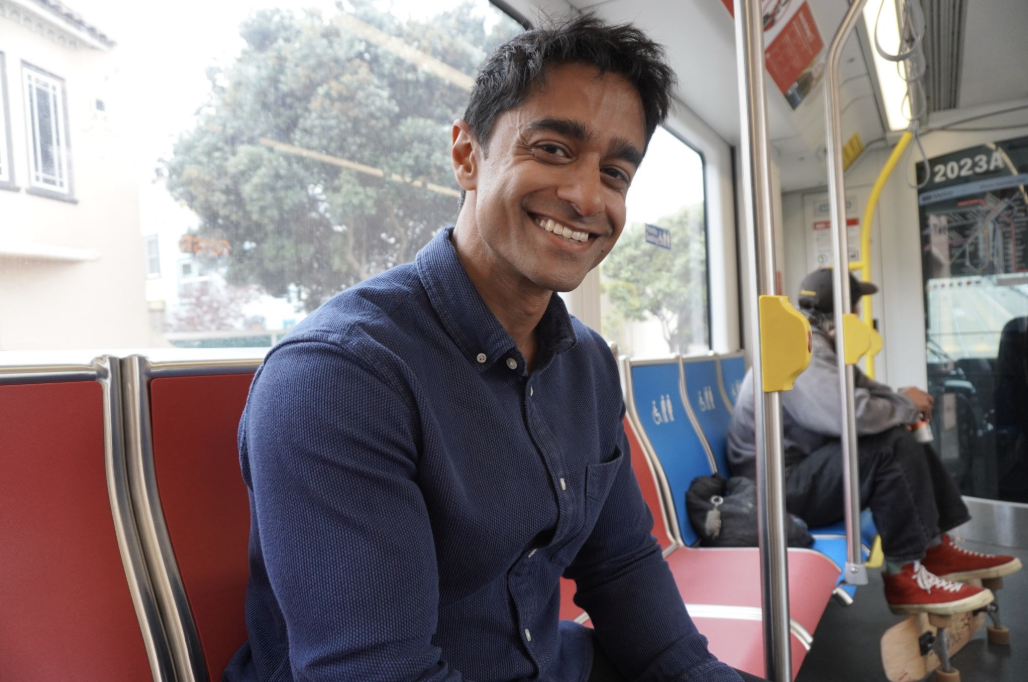
Photo courtesy of Saikat Chakrabarti’s Media Kit/Website
Saikat Chakrabarti’s path to becoming a congressional candidate in San Francisco has been unconventional. From winning a ”lottery ticket” as a founding engineer at Stripe, to co-founding Justice Democrats, to serving as AOC’s campaign manager and later her Chief of Staff, Chakrabarti is now launching his campaign as a progressive insurgent candidate in California’s 11th District. In this interview which took place on October 29th, 2025, Saikat Chakrabarti offers his vision for the future of progressive politics.
Kate Mao: I want to begin with your background in technology. It’s often viewed as quite unusual for someone who’s worked extensively in the startup space within Silicon Valley, and even in hedge fund management, to pivot to championing a vision for progressive politics. More recent examples, like that of Elon Musk or Peter Thiel, show us that technocrats tend to find themselves allying with conservative or even alt-right forces. So I wanted to ask, what do you think made your experience and trajectory so different?
Saikat Chakrabarti: I think it might be just my upbringing? I grew up middle class, going to public schools, and my parents grew up frankly, poor. My dad was a victim of partition in India. He was a refugee who had to flee overnight. Their struggle, values, and experience really shaped how I view the world. Part of it is this idea of how we have a society set up where a few people can just win a lottery and have everything, while other people who are doing everything right, working hard, will never be able to afford a home and are struggling just to live.
Even in my parents’ story, that’s kind of true because my dad won a lottery ticket. He got a visa to America. When I go back to Calcutta and I meet a bunch of his friends and family, people who work just as hard as him, who are just as capable, they never were able to make it out.
I think that sort of unfairness and injustice is a large part of what shapes who I want to be fighting for, and who I want to be doing things for. What drew me to the tech industry was this idea that back in 2007, tech was really being pitched as maybe a way to solve some of the big problems in the world.
This is the era where Muhammad Yunus had just talked about microfinance, and I thought finance might actually be a way to solve a lot of big challenges globally and tackle poverty. I guess my experience working in tech really felt like that wasn’t what I was working on. That’s why I quit.
I wanted to work on the actual real problems of the world. I actually wrote a list after I quit. It’s very cheesy to say this, but I wrote: “Inequality, Poverty and Climate Change” on my list. I wasn’t political at the time, but Bernie Sanders was running for president, talking about that in a very authentic, real way, and I wanted to see what that was all about.
And that’s how I got into progressive politics.
Pivoting to politics, you gained a lot of attention when you first served as Congresswoman Alexandria Ocasio-Cortez’s campaign manager, and then later chief of staff, when she primaried Congressman Joe Crowley, who at the time was the fourth ranking member of the House Democratic Caucus. As her chief of staff, you played a major role in leading the writing of the Green New Deal. How did that experience teach you about what running a successful insurgent campaign meant, and how to kind of, dream big?
I think on the first front, you have to be authentic and honestly fight for people. That’s at the core of it. And that means that you have to be very transparent. You have to put your whole life out there and engage with everybody.
You have to actually build a mass movement. That’s the way AOC’s campaign worked. She didn’t have any big money interests on her side. She was outraised 10 to 1. But what she didn’t have in money, she made up for in people. The only way you make a people powered movement work is if you have energy. You need to have something that’s driving people to come out and knock doors and help volunteer at events for you because they believe that they’re part of something that’s going to lead to real change. You have to have big ideas, as part of your campaign. That’s the only way it works. And that’s the main reason I work on that stuff, is because I actually felt like the big ideas could go somewhere.
Now, when it comes to dreaming big, honestly, that whole experience with the Green New Deal, made me realize how easy it is actually to get something that felt so big and impossible to turn into real change. Because, the Green New Deal is best viewed as a sort of political strategy and a political intervention more than it is a policy that we’re trying to get across. At the time that we did the Green New Deal, we were really trying to get two big ideas into the conversation.
One was that we wanted people to have way more ambition on climate. All the climate plans back then were just way too small. The second piece was we wanted people to be looking at solving climate change as the same problem as building up a high wage, high value economy. When using this different approach we’re really using the state to drive in investment and fix a lot of the underlying economic issues that have been plaguing so much of America.
And, to put those ideas out there, AOC did a sit-in in Pelosi’s office on her first day in DC, which is crazy to think about. Imagine doing a sit in in your boss’s office on your first day at work. But that’s what she did. And she joined the Sunrise Movement to do it.
We did this inside-outside strategy, where Sunrise was organizing on the outside doing sit-ins, while I was calling people on the inside. I’m trying to get people to sign on to a Green New Deal. We did, specifically at a time when the Democratic primaries were going on, so our goal very explicitly was to get everyone running for President to respond to a Green New Deal with their own climate plans that would be way more ambitious, and would actually talk about building this clean economy, because no one was talking about that in all the conversations—all Climate at that time was a carbon tax perhaps, or cap and trade.
And, and it worked. Everybody running for president responded with their climate plans. Joe Biden responded with Build Back Better and then that turned into the Inflation Reduction Act, which actually passed. It wasn’t everything I wanted, but it created the largest investment in climate change in history. So if there’s anything it really showed me, it was how a single act of political courage by AOC—doing a sit-in—could lead to so much.
So what would be possible if we actually had dozens of people like that in Congress who were willing to be courageous, who were willing to have real political will, and who were willing to dream big about what’s actually possible?
I know you’re currently primarying former speaker of the House Nancy Pelosi. In past interviews you mentioned that the way you differentiate yourself from the policy visions of Senator Sanders and Congresswoman Ocasio-Cortez is that you think more about the manufacturing and creation of jobs specifically. Could you elaborate a bit more on the specifics of where you find your vision differs?
I wouldn’t say it differs so much as it’s another piece I talk a lot about. Because I totally agree with them on universal health care, universal childcare, tuition free public college, taxing the rich—thinking of housing as infrastructure that we’re actually investing and building proactively, not just letting the private markets do what they want and have rents go up and up and up.
But the other part of my focus is when I look at the history of countries that, through the 20th century went from being poor countries to rich countries—including America—all went through periods where they completely transformed and upgraded their economies. Through not just manufacturing, they operated a government in a completely different way. This has been the focus of a lot of my work at my think tank, New Consensus. We call this mission mode, when countries go into mission mode, they don’t just pass some policies.
Usually a movement comes into power that organizes a civil society around some mission. Sometimes the mission is we’re just going to get wealthy as a nation and create wealth for a bunch of people. Sometimes a mission, in our case with World War II, was to win the war.
They bring civil society along. They create comprehensive plans to actually hit those goals, and create institutions of finance and execute those plans. We used to have a bunch of these and got rid of pretty much all of them after World War II. The largest by far was one called Reconstruction Finance Corporation, which was kind of like a public bank, but combined was also a project manager [which] would go around and figure out what needs to be done, and proactively make it happen. So this is really common when you learn about developmental economics but for some reason wealthy nations like America, somehow forgot, but wealthy nations like China actually still use this playbook and that’s why they really have leapfrogged ahead of us on a lot of industries.
Focusing on a more narrow part of this vision, a large part of your platform in this election is built on housing policy—specifically focusing on cutting the red tape and building more affordable units through potentially creating more private-public partnerships. So while campaigns like Mamdani have focused more on enacting rent freezes and tenant-focused approaches, you seem to offer a vision focused on increasing the development and supply, while also, narrowing down on this, tenant-centric vision. I was wondering about why you kind of chose to focus more on these specific administrative hurdles, especially considering that your race is located in San Francisco.
I’d say my vision on housing is twofold. One piece of it is red tape and cutting the cost and time of construction, something that Zohran’s also campaigning on—he wants to clean up red tape—would make it easier to construct housing. Then the second piece of it is I believe that won’t be enough.
I actually think we need public, not really public-private, like public financing. We need to actually build social housing directly from the public. That’s something that’s illegal right now is something called the Faircloth Amendment that actually says we can’t build any new public housing in America. We need to have all these tools to directly build housing, finance, housing and make sure it gets built.
The reason I focus on that stuff is that’s what we can do at the Federal level. I’m running for Congress, so I’m not going to be in a position where I can call for a rent freeze in San Francisco. But I will be in a position where I can use the power of the federal purse to both push cities and states to make housing plans.
This is another piece that I didn’t mention earlier, but I really call for states to create housing plans. The same way that we create plans for roads, bridges, and power grids in the country. We think of those things as infrastructure. Housing is also infrastructure.
When I say plans, I don’t just mean plans for zoning. I mean, we actually need implementation plans. How are we going to finance this housing? How are you gonna get it built? Who’s going to build it? So that’s kind of a different approach. I think we can do it at a national level.
Democrats, for a long time have been told to “Vote Blue No Matter Who” in electing candidates. However, what we’ve seen is that when progressives win like Omar Fateh and Zohran Mamdani, the establishment often rejects their own saying. Historically, primary challenges, especially from the left, have been discouraged within the Democratic Party due to an apparent compulsion to maintain the status quo. So I was wondering what empowered you to overcome this stigma and launch a primary campaign against Speaker Pelosi?
Well, I don’t want anyone to think that I’m overcoming the stigma. Because certainly no one from the establishment is going to be coming and backing my race. This is what I’ve been pushing for the party for about a decade. I fundamentally think the Democratic Party needs a change, right? I think it’s a broken party at this point.
I think it’s too slow moving. It doesn’t have any vision of what to do for the future. It doesn’t have the strength to stand up to what I believe is a real authoritarian coup right now. And it’s not actually capable of implementing. And you know what I’m talking about doing a big vision like this.
We actually need people who know how to build that and who know how to implement it. And I don’t think the Democratic Party is that right now. And this is all not even to mention that the Democratic Party is bought out by big corporations and frankly, corrupt, you know, a lot of the big part of the party is corrupt.
I’ve been leading or I’ve been pushing for kind of an insurgent sort of takeover of the party, not by just progressives and leftists, but just by people who aren’t bought out, by people who actually want to do something, by people who want to, you know, push for real change, for these problems that people are, that most people are facing in the country.
And that’s, you know, when we ran, AOC race, we didn’t have any support from the establishment in that race. When I ran all these other races in Justice Democrats, because we also recruited other folks run by Cori Bush, Jamaal Bowman, Summer Lee in Pennsylvania, those races did not get support from the establishment either.
Right. I think the establishment is not going to realize that the world is changing and they’re fighting tooth and nail to hold on to what they have, which is, frankly, a losing and broken party. And so we’re going to have to push it. Right? We have to push this change.
And, you know, people like Schumer and Jeffries, they don’t realize how much damage they’re doing to our party right now by not backing people like Zohran, because they are telling everybody out there that, in fact, you know, we only back the candidate when it’s our guy and when it’s not, we won’t. And that’s the exact kind of politics I think people are so sick of.
I think that really speaks to a lot of the issues that are going on between the Democratic Party establishment and the base itself. More about your own race, State Senator Scott Wiener recently declared that he would also be running in your Democratic primary, a relatively unexpected entrant for the 2026 campaign season. How do you see your vision as differing from his, and how does this affect your race and campaign strategy?
I think the big way that we differ, he and I, [is that] State Senator Scott Wiener, had a lot of experience getting legislation passed in a largely Democratic California Senate, he’s been in government for about 14 years. His main focus has been housing. His approach to housing has been just deregulation, nothing around how you actually finance and fund and implement this stuff and, I think the results so far have been that rents in San Francisco have doubled in the time that he’s been in government, focused on this specific problem. So I don’t think his solutions are working.
But the flip side of this is he’s experienced in passing these small reforms in a Democratic Senate. I think that is not what we need in Congress right now. I actually think we need a vision for what to do structurally, and we need people with experience on how to take those structural, big ideas and turn them into real legislation, which is the experience I’ve got with the Green New Deal.
That’s what I plan to use to get things like Medicare For All passed like Universal Childcare passed. It’s a different kind of mentality. I’m calling for building a movement of candidates all around the country, primarying Democrats everywhere, really leading this insurgency in the party. That’s not something Scott Wiener’s going to be talking about.
I don’t think he’s been very effective, to be honest, in the State Senate, I don’t think is going to be very effective at all in Congress.
Then, on specific policies, I don’t think he has a policy page up. So it’s hard to pick all of them.
But I do know that he and I have a big disagreement when it comes to the specific issue of Israel and Palestine. I’m someone who does believe that Israel has been committing a genocide in Gaza. And it’s not [just] my belief. That’s what the UN has said. That’s what genocide scholars around the world have said, and I don’t believe we should be funding that.
I would be a vote to stop all military funding to Israel. Senator Scott Wiener has refused to take a position on the Block the Bombs Bill. He’s someone who has pushed strong censorship legislation in California that tries to equate criticism of Israel with anti-Semitism in our public schools and I think that’s really dangerous. That’s the same sort of tactics we saw Donald Trump used to go after campus protesters.
But more than that, I think it’s about who’s actually fighting for structural change, building a movement, building a real Democratic party that can stand up to authoritarianism and really build the economy that we need.
Again to this idea of a vision for the Democratic Party, you appeared on The Ezra Klein Show to debate his book Abundance where he and Derek Thompson identify changing the regulatory environment as kind of the primary shift that’s needed within Democratic politics broadly. Obviously, in the post-2024 election, almost everyone has been discussing ways for the Democratic Party to change, and I know you’ve been doing this for a long time. Where do you see that heading? And how do you see yourself as a leader in pioneering a new future, replacing and challenging the establishment?
The way I think about Abundance, which is the book that Ezra Klein and Thompson wrote, I think the vision of where to go is great. I do think we should go to a world where we have an abundance of things that people need to live, and make them affordable.
Where I have something to add to this conversation is, a lot of the focus in that book and in the abundance movement at large has been around, how do we cut red tape and deregulate? I’m not against cutting red tape, as I mentioned, my housing platform, I think, I just think it’s folly to think that that alone will get us there, because that’s never happened.
In the history of every country has ever done this kind of movement to build industries, build housing, build everything we need, you need a strong state that is making plans and financing, executing that stuff.
That’s a big part of what my vision is building that strong state. Creating the capacity of us as a society to say this is what we want the economy to be for, and we’re going to direct it there. And then another piece of this, which is tangential to the abundance stuff is just I think we do need to recognize that most people in this country right now feel that we have a rigged and corrupt political and economic system.
I think we have to be calling that out specifically. I think we ought to be talking about things like banning congressional stock trading, getting real big money out of politics, getting rid of the influence of corporations in the party to earn that trust back. Because it is a big problem. And, the other piece that I think Abundance doesn’t talk so much about is, say we can create all this stuff, but how do we actually ensure everyone has access to all this. Which is also going to require a strong state.
So universal health care, universal child care, you know, I’m actually of the view on universal health care now that it won’t just be enough to pass Medicare for all. We’ve got to go further and actually have government provided health care, kind of like how they have in the UK with the NHS, because so many parts of our country don’t have health care.
I think overall it is a vision where everybody has what they need to live, where you can work eight hours a day, five days a week or less, and get everything you need, because we should be able to get to that society. And then once we get there, I think we have to expand freedom and try to actually pitch this vision of a multicultural society, which is in opposition to what MAGA is pitching right now.
Saikat Chakrabarti’s vision for a progressive agenda is a part of a broader movement across the United States in rebuke of the democratic political establishment. Across the country, there have been an unprecedented number of progressive challengers who articulate a vision for the Democratic party which contradicts the typical idea of reform—they see the party as fundamentally “broken”. Since filming the interview on October 29th, 2025, Speaker Emerita Nancy Pelosi has officially announced her retirement and will not seek reelection. Saikat Chakrabarti is now running against State Senator Scott Weiner and San Francisco Board of Supervisors member Connie Chan in a competitive primary in California’s 11th district.
Kate Mao (CC ’29) is a staff correspondent at the Columbia Political Review and a freshman at Columbia College, majoring in Economics-Political Science.