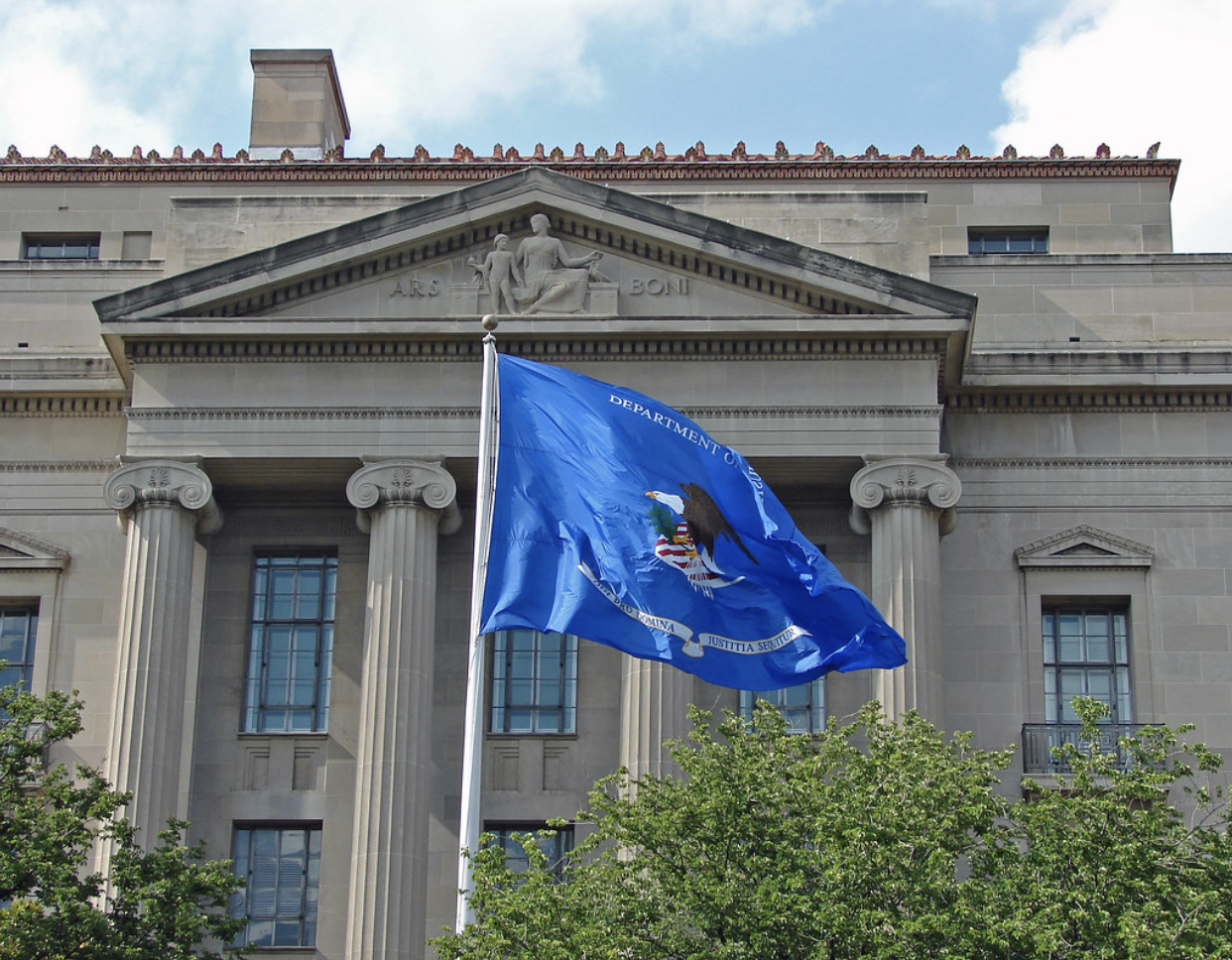
Photo courtesy of Steve Fernie (Source: Flickr)
Since the height of the COVID-19 pandemic, and the subsequent decline in public discourse surrounding Asian American and Pacific Islander (AAPI) discrimination in America, the current state of anti-Asian hate in the United States has become increasingly ambiguous.
In this interview, Staff Correspondent Isabel Lu is joined by Professor Ejaz H. Baluch, Jr. a professor at Columbia Law School and an attorney with the Public Justice Center’s Workplace Justice Project. Professor Baluch has extensive experience in the Department of Justice’s (DOJ) Civil Rights Division, working on cases concerning Employment Discrimination. While at the DOJ, Professor Baluch also advised on the White House’s Initiative on Asian American, Native Hawaiians, and Pacific Islanders to address instances of Anti-Asian hate or discrimination.
During this conversation, Professor Baluch discusses the historical and ongoing discrimination experienced by Asian American and Pacific Islander communities, followed by his reflections on the current state of affairs within the Department of Justice.
Isabel Lu: I'd like to talk about how Asian-American Pacific Islander communities were impacted by the pandemic and targets of racial discrimination. From hateful slurs to violent street attacks, the AAPI community has faced intense racial violence. However, now years after the pandemic, many believe that such discrimination and targeting has returned to pre-pandemic numbers. In what ways do you think AAPI discrimination has or has not changed, whether that be in the culture surrounding it or the type of harassment the community is facing?
Ejaz H. Baluch Jr: I think that in some ways it has changed. In other ways it hasn’t. The FBI’s hate crime data suggests that hate crimes against AAPI communities has decreased. And while, I'm hearing from community organizations that that is true to some extent, the FBI data is widely considered to be an undercount. The reason why it’s an undercount is because of very complicated reasons: hate crimes against AAPI members of the community are often not reported to law enforcement because of the complicated relationship AAPI communities have with law enforcement. I think while it is true that explicit discrimination and hate crimes against AAPI communities have lessened because the pandemic is no longer top of mind, there is still a lot of discrimination and hate crimes being perpetrated against the AAPI community in ways that the data is not completely capturing right now.
Do you believe this also remains true in major metropolitan areas like New York City?
100 percent. A lot of census data shows that Asian-Americans, Pacific Islander Americans, and Hawaiian Americans, are clustered in urban areas. I think the discrimination these communities face is subsequently clustered in urban areas as well, especially large cities like New York, Los Angeles, Seattle, and San Francisco, where a lot of AAPI people live. And that’s where unfortunately, discrimination takes place as well.
With your extensive work in the Department of Justice and your past in the district courts of Maryland, how do you see discrimination changing specifically in the legal sphere? Specifically, through the classification of discrimination or what kind of standards qualify an act as racism?
As time has gone on, the legal standards for proving discrimination discrimination have gotten more difficult. When Title VII of the Civil Rights Act of 1964 passed in the 1960s, laws prohibiting employment discrimination or prohibiting housing discrimination, with the Housing Act of 1965, … were enacted to address very explicit racism. Then the type of evidence that these laws had in mind to prove discrimination are very explicit kinds of evidence: a landlord saying “I'm not going to rent to black people” or a supervisor saying, “I'm not going to hire Asian people in my store.” And these laws have also included something called disparate impact theory. What disparate impact theory says is that even if you’re not being explicitly racist or discriminatory, if the effect of your decisions disproportionately hurts one particular group in a way that is not related to the job or the service you're trying to provide, that still counts as discrimination. This is a really powerful concept, because even if you’re not explicitly racist and making decisions that hurt a community in ways unrelated to what you're trying to do, that’s still discrimination. But we’re seeing now the idea of disparate impact being under attack. The Supreme Court has never explicitly said disparate impact theory is constitutional. And there's a lot of fear, among those who rely on disparate impact theory to fight discrimination, that the conservative supermajority on the Supreme Court might eventually rule that this is unconstitutional. It’s getting harder to prove discrimination if it's not explicit, but the discrimination that's happening is becoming less explicit and more hidden. And people who commit discrimination are becoming a lot more sophisticated in their actions.
On this theory, what would you anticipate to be the influences of its repealing and how would it affect, specifically New York City, AAPI communities?
As of right now, it’s the law of the land. But it is very hard to bring a case on this theory unless you have massive resources, because it requires a lot of time and expertise. There are experts whose whole expertise is to work on these things and they are very expensive. Experts are expensive. Effectively, the only sorts of organizations that can rely on this sort of argument are really large organizations, some of which are in New York. These include places like the ACLU, Asian American Legal Defense Fund, and the Department of Justice; but the Department of Justice under this administration is not interested in doing this kind of civil rights work. And this affects the large AAPI community in New York, because a lot of this discrimination is going on unchecked. I fear that it's going on unchecked. And it is getting harder to hold people who discriminate accountable for what they're doing because it's becoming harder to enforce these sorts of protections and laws.
I wanted to ask you more broadly about the legal history of Asian American and Pacific Islanders in America, since it is very sparse. As I mentioned before, there's been very few major cases addressing AAPI discrimination, like People v Hall that legalized violence against Chinese Americans with the Chinese Exclusion Act and a recent federal lawsuit between United Airlines and the US Equal Employment Opportunity Commission. How do you think this limited legal history has affected the public's awareness and attitudes toward AAPI discrimination in America?
In the popular conception of discrimination, people often overlook its application to the AAPI community. The limited legal history is one reason, but part of the reason is also that there is a legal history that a lot of people don't know about. I think most people, even civil rights attorneys, don't know the cases you mentioned. And the legacy of Asian American discrimination being enshrined in American law is very different from other races’ because a lot of the legal history centers around AAPI’s proximity to whiteness. There’s a couple cases in the late 1800s or early 1900s about whether a Japanese person was considered white or not under the law. There's another case about whether an Indian American person is considered white under the law. In both cases, the court said no. And then they lost their rights as a result. This history is rarely taught in law school and in grade school especially. I think it all feeds into what’s called the model minority myth. That Asian-Americans are somehow the model minority who are, even though they are people of color, are able to overcome racism and other barriers that other races have not. But this is all a myth. I think because of this myth, the idea of racism and discrimination applying to the AAPI community is often overlooked.
In your past, you've worked on the White House initiative for AAPI communities. Could you elaborate on how your work there was trying to combat this issue? In what ways has it been effective?
We just talked about the model minority rights and part of what perpetuates this myth, including explicit racism, is how this umbrella category of “Asian” is a very broad category. It includes hundreds of cultures, identities, languages. These different populations have very different needs. However, because everyone is grouped together under this one very broad category, those needs are paved over and hidden. For example, the liver cancer rate for Asian Americans as compared to the rest of the American population is above average. On average, Asians get liver cancer less often than the rest of the American population. However, if you were to look at specific Asian populations, Laotian women actually have nine times the rate of liver cancer than the American population. But we would never know that because they're grouped under this really broad category of Asian. Part of what I worked on when I was at the White House Initiative for AA and NHPI’s is how can we as a society, especially in the federal government, disaggregate the data. This means separating these different groups so that we can see what's happening to one specific community and how they might not be getting their needs met as opposed to grouping everybody together. I am surprised to say that some of that work hasn't been undone yet. It’s still continuing by the census and I hope that that continues to be the case. Because that would really help address some of these issues. Then part of what I did as well was working on various initiatives and policies to fight anti-Asian hate and discrimination, especially using my background as a civil rights attorney.
To elaborate on the model minority myth, it's often talked about when we discuss Asian American history in America, and looking back on a recent case of a group of Chinese plaintiffs against Harvard and elite institutions, what would you say were the effects of those cases on the American psyche? When those cases were ongoing, it cast a negative light on the community—specially when people lump them all into just one monolith.
For sure. That’s a great example of the model minority myth in action. Essentially what the people who brought that case were arguing was that Asian applicants to college are way smarter than everybody else, and yet they are getting passed over for Black and Latino applicants. This is really playing off of that myth. And I think it's complicated because if you were to look at the evidence presented in that case, from witnesses and documents, it is true that some of these institutions were discriminating against Asian applicants. Some of the things they were saying about Asian applicants were pretty clearly racist. And I think that nugget of truth helps validate the very real experiences that AAPI communities face. They do face discrimination in these ways. And you can tell from the evidence, that the people who are deciding who gets into these colleges were themselves invoking the model minority myth and saying “Let’s not admit this person because they're going to be fine, who cares?” But the way that was weaponized to hurt other marginalized communities and perpetuate a myth that itself hurts the AAPI community, that's the part I really disagree with. It's really unfortunate that they took the very real discrimination that was happening, and used it to pit different marginalized communities against each other. And that's just a really shameful result.
I want to pivot to your work at the Department of Justice and your recent departure from the federal government. While with the DOJ, you worked for the Civil Rights Division and primarily represented the federal government in cases regarding identity based discrimination in the workforce. From this, I want to hear first from you why you decided to resign from the DOJ.
Before I was an attorney, I was a teacher in West Baltimore where I taught in a marginalized community for three years. I taught middle school social studies. And that experience showed me firsthand the effects decades of systemic racism can have on a community. Where I taught, it was a community where there used to be laws that said, only black people are allowed to live in that neighborhood and cannot live anywhere else. When those laws were ruled unconstitutional, there was redlining by the banks. They said, “We’re not going to give mortgage loans out to people in this community” [to move away]. And then in 2015, it was the same community where Freddie Gray died in police custody, which then sparked days of protests in the city. Being there and seeing this up close, I eventually realized that there was only so much I could do in the four walls of my classroom. I wanted to help address those more systemic problems that were putting pressure on my students and their community. And so I wanted to be a civil rights lawyer. And that's the perspective I came to the Department of Justice with. I wanted to do civil rights work. I wanted to address systemic racism in the Civil Rights division. And I was very fortunate that I was able to do that for five and a half years. I should note that when I first joined DOJ, it was under the first Trump administration. And when the priorities were different then, we were still doing work addressing systemic racism. Maybe not as much as we could have, but we were still doing it. But under the new administration in January, it became very clear to me that we will no longer be doing that, and that instead, the work we would be doing would only be against perceived political enemies. We were going to abandon our mission to enforce civil rights law. And the only work we would do involved people who were white or addressing anti-Christian bias and anti-Semitism as they define it. And that would be the only work that we would be doing. That's not the work I came to the Civil Rights Division to do—I wanted to confront systemic racism. So that's why I left.
Do you ever see yourself returning to the federal government?
I would really hope to. My other colleagues and I who left would really like to come back and rebuild the civil rights division that we used to know. As well, rebuild it better and more effectively, and to return it to its original mission. The Department of Justice originally began to fight Klansmen during the reconstruction era, and I think we would like to return the Civil Rights Division to that historical mission of fighting systemic racism.
When you joined the DOJ in 2019, right before the pandemic, what was that experience like being in the DOJ and working on employment discrimination both during the height of the pandemic and through its fall.
It was really interesting, and as you know, as everyone loves to say, the pandemic was an unprecedented time. As a result, the kind of discrimination that was happening was unprecedented. There was the anti-Asian hate that was happening, which we've talked about. And there were also, for the first time, large numbers of people working from home. That gave rise to really new and unique forms of discrimination. For example, certain people were allowed to work from home and other people were not. Sometimes those decisions were based on a protected class or minorities were the ones who were on those who are assigned to the frontline, most riskiest jobs where the risk of contracting Covid was much higher. Whereas, white employees were allowed to do jobs that were very shielded from that. There were a lot of really new forms of discrimination that had never happened before, and we had to be very nimble and adapt to it very quickly in order to try to prevent that from happening. That was really challenging.
I also want to speak more specifically about your departure. When the Justice Connection published their letter with the Department of Justice alumni on October 6th, the letter was focused on denouncing the actions of the current administration and urging the public to “fight back” against what was going on. A myriad of constitutional violations that were cited in the letter. As I understand, you were mentioned as an alumni in this letter, therefore I would like to follow up with you on its content and how it mentions the public outlash against DOJ employees and how it was “misplaced.” How did you experience the effects of this while working for the DOJ and possibly now after.
There has been a lot of rhetoric before the current administration, about the so-called deep state. This is an idea that federal workers are nefariously carrying out crimes or their own personal agenda—a political agenda to harm the American people. This rhetoric is really inflammatory and makes people really upset when they hear it. As a result, when I would be in the field doing an investigation or doing what’s called election monitoring, where we’re making sure that people have safe access to the ballot, I would talk to the general public. There were some people who instantly did not want to talk to me or they were very hostile towards me. One example is when I was in Arizona in the 2024 presidential election. At one polling site, as soon as I identified myself as a member of the Department of Justice, some people overheard and they started filming. They immediately assumed I was there to do something wrong. This is obviously, on a personal level, pretty scary. But I think more importantly, this kind of rhetoric and the effect that it had to scare people and obstruct what I was doing, hurts civil rights enforcement. It makes it harder for us to enforce our civil rights laws. If I’m doing an investigation and someone doesn’t want to talk to me, I can’t find out what happened and then I can’t bring a case. Even though discrimination could have occurred. That kind of rhetoric is the real world effect that it has on the department and its mission.
While you were at the DOJ, you commented on some recent actions the department took regarding anti-Semitism on college campuses while you were still with the division. You told ProPublica that “the process was turned upside down.” I would like for you to elaborate on this quote and specifically on how it affects college campuses.
Sure, I'll just add the caveat at the outset here that, you know, I'm not going to comment on any specific case that I've been on, but to talk more generally. President Trump and Attorney General Pam Bondi have made it clear that one priority of the administration is to combat anti-Semitism on campus, which is not a bad thing. However, it has become clear that they define that as any kind of pro-Palestinian protesting or speech on campus. They define that writ large as being anti-Semitic. The only cases the DOJ was interested in bringing to combat antisemitism were cases involving colleges that they perceive to be liberal institutions and/or colleges in states that are Democratic states—places like California, Chicago, or New York. It became clear that these sorts of investigations and cases weren’t actually about antisemitism. After October 7th, there has been anti-Semitism and Islamophobia against Muslims and Jews, based on the war in Gaza. And that’s very real and that’s a problem. However, it became clear that the only sorts of cases, investigations that were going on were ones targeting pro-Palestinian speech, which violates the First Amendment. When I said that the process was “turned upside down,” I meant that the process was no longer about following the facts and the law to see if there was discrimination happening. It was only about picking people to punish and then punishing them. And that’s not how civil rights investigations are supposed to work, in my opinion.
Do you see this situation possibly changing sometime soon, whether it be a de-escalation or an escalation?
I think it’s hard to tell. I think as long as this administration is heading the Department of Justice and other federal agencies that conduct civil rights investigations, I don't think it'll stop or go back to how it's supposed to be, sadly. However, I do think how it could change would be through the colleges and universities that are starting to band together to push back against this kind of weaponized investigation. If they continue to do that and exercise their leverage, then perhaps the pushback will be effective. And this sort of weaponized investigations will decrease. That's my hope. I think it's kind of early to tell, some colleges are doing that and other ones are making a deal with the administration now. Time will only tell how effective that will be.
How do you believe this could affect students at such institutions now or into the future?
I think it really depends on the institution. I think sadly for institutions that have decided to make a deal with the administration, I am very worried about students’ ability to exercise their First Amendment rights. A lot of these deals that the administration has made with universities severely restrict valid First Amendment speech, protest activity on campus, and ability to be part of certain student groups. And certain university departments are at risk of getting cut completely or banned. Sometimes that is legitimate, but other times it is because it’s a disfavored group under these new agreements. This sort of chilling effect on legitimate First Amendment speech is sadly one effect that it could have. But I think for universities that are pushing back, it’s caused universities to take a close look at what rights students have. And I think that's a good thing to double down on.
Looking at the Free Speech amendment of the Constitution, the First Amendment has been heavily litigated throughout America's history. As well, there are many standing precedents for free speech for students. Do you believe those are also under attack? How strong could they be in this situation?
I definitely think it's being tested right now. There has been a lot of precedent, like you mentioned, being invoked by both sides and to this very new situation. It is interesting to see how courts are interpreting it. There have been a couple big cases, one in New York at Hunter College or Union College, and one at the University of Maryland in College Park, which happens to be my alma mater. At both campuses, there were supposed to be large pro-Palestinian rallies, and then courts tried to identify the line of what is protected First Amendment speech and what's not. And then in both cases, I think the courts drew a very fine line where they said, “well, certain things are protected and other things are not,” and they really are trying to thread a needle. But I think it's really difficult. There are easy cases, like when things devolve into property damage, campus disruption, and violence. I think it's really easy to say that is not First Amendment protected speech, but there's other things that are on the border. And sometimes courts go one way, sometimes they don't. It's a very fine line that courts are trying to thread right now.
I can see that. And is there anything else you would possibly like to mention that I didn't talk about today?
Right now it's very easy to be discouraged. Whether it be issues like AAPI discrimination or campus free speech that somebody cares about. But I think what gives me hope is people like you doing what you're doing and shining light on these important things. And so I really appreciate that folks like you and your organization are doing this.
Conclusion: Professor Baluch provides a vital perspective into the current state of discrimination against the AAPI community and the Department of Justice. The AAPI community continues to heal and move on past the rise in anti-Asian hate experienced during the pandemic. Professor Baluch also shares hope for those who read this article. As long as we engage in productive discourse and dialogue on these issues, we can spread recognition and hopefully reconciliation.
Unfortunately, the current state of our political and government system remains unclear. The Supreme Court recently litigated the Executive Branch’s power to make decisions for federal agencies with personnel management, and the decision has the ability to dramatically shift the balance of power within the federal government towards the Executive Branch. With the Supreme Court’s opinions and subsequent pushbacks, the future of this issue still remains unsettled. However, Professor Baluch provides critical context from inside the federal government to help us understand what is going on and remember that despite the current turmoil in our government, there are many actors pushing back and working for the benefit of all Americans.
Isabel Lu (BC ‘29) is a staff correspondent at the Columbia Political Review majoring in Political Science and Economics.