The Fraying Order: Multilateralism in Crisis
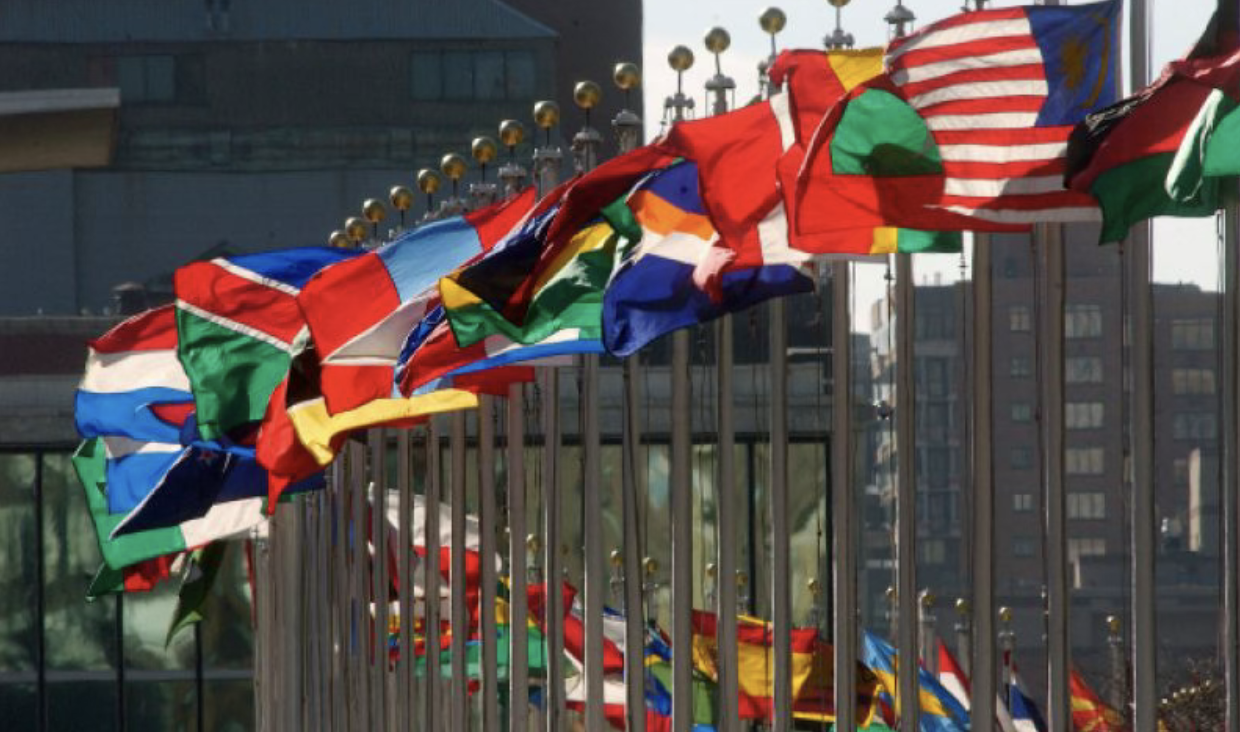
Flags of member nations flying at United Nations Headquarters. Photo courtesy of United Nations Photo/Joao Araujo Pinto.
Introduction:
The post-Cold War international order was built on the promise that multilateral institutions could manage conflict, coordinate prosperity, and give smaller states a seat at the table of global governance. Decades later, that promise is under strain from geopolitical tension. Across the political spectrum, there is growing skepticism that institutions designed in the twentieth century are still equipped to address today’s challenges.
However, institutions endure, adapt, and sometimes surprise. These five articles examine multilateralism from within, tracing how the Arab League, Mercosur, the European Union (EU), Association of Southeast Asian Nations (ASEAN), and BRICS+ are each grappling with what cooperation means in their region at this particular moment in history. Each piece asks, explicitly or implicitly, the same questions: what has multilateralism actually delivered? Where and why has it fallen short? And is there still a desire to sustain it?
The answers vary. Mercosur’s EU partnership and ASEAN’s Digital Economy Framework Agreement demonstrate that patient institutional cooperation can still generate binding outcomes. On the other hand, the Arab League cannot compel its own heads of state to attend its annual summit. The EU is actively expanding its multilateral partnerships. And, BRICS+ struggles to articulate a shared agenda beyond opposition to Western financial dominance. These institutions reflect fundamentally different relationships between institutions and the states that compose them, and together they offer a stress test of whether multilateralism itself still has a future.
Spotlight-Seeking Leaves Arab League In the Dark
Miya Segal, GS ‘27
For the Arab League, multilateralism separates idealism from reality of the precarious environment of the Middle East and North Africa (MENA). Since its founding in 1945, the Arab League has toed the line between broad coordination and mere rhetorical unity amongst its 22 member states. As the MENA region is destabilized by interstate war, civil conflict, and regime change, members have leveraged crises to elevate their own diplomatic standing rather than consolidate supranational authority. This pattern has led to institutional underperformance and feigned multilateralism while power politics unfold elsewhere in the region.
Unfortunately, the pattern is structured by the League’s own design. The League operates on consensus or near-consensus voting, with non-unanimous resolutions only binding to states that consent to them explicitly. There is no centralized enforcement authority, military apparatus, or independent fiscal capacity. In contrast, the European Union, possesses delegated competencies, a court system, and mechanisms for sanctioning non-compliance. Institutional authority in the Arab League is derived from members’ wills at every stage, including agenda-setting, implementation, and enforcement. In this configuration, multilateralism is thin; the institution cannot transform state positions. If the Arab League hopes to overcome its stagnation and dwindling relevance, it should reform its voting and enforcement by tying compliance to majority-vote resolutions, reducing states’ ability to bypass collective decisions.
Such a change will be existentially crucial, as sovereignty-maximizing features converge with intra-Arab status competition. Regional leaders such as Egypt, Saudi Arabia, and Qatar have found regional status by seeking roles as independent diplomatic brokers. Recent mediation initiatives including Lebanon, Gaza, Sudan, and Libya were not conducted through trilateral coordination or League forums, but through bilateral coalitions. High-profile summits, including the French-Saudi initiative on the two-state solution, are also typically convened outside of the League. Consequently, diplomatic successes are attributed only to the state involved. Competition with Iran fuels desire to achieve visibility unilaterally,not collectively through League mechanisms.
If multilateralism were functioning within the League, states would channel major diplomatic initiatives through the institution to enhance collectivity. Instead, overlapping institutions enable member states to engage in “forum shopping.” Organizations like the Gulf Cooperation Council, African Union, and Organization of Islamic Cooperation offer specific, alternate venues to circumvent the League’s agenda-setting authority. Ultimately, such institutions relegate the League to one-of-many rather than the core of Arab multilateralism.
Still, the League is not devoid of function, finding success in trade. The Greater Arab Free Trade Area reduced tariffs between members for steel, iron, and electric materials. In this manner, the League’s institutional coordination produced tangible results. Similarly, the League has engaged with China to facilitate infrastructure and energy collaborations. This is helpful for Gulf states to diversify beyond American partnerships. Still, economic coordination has failed to expand into the political realm, highlighting how the League’s capacity is limited to low-stakes, technocratic issues.
Ultimately, the Arab League’s sovereignty-maximizing design disincentivizes engagement with multilateralism. Its rules protect autonomy while resolutions lack coercive force, encouraging regional players to bypass the institution in favor of international clout. This dynamic was exemplified at the League’s last annual summit in Iraq, which was notably snubbed by several senior Arab leaders. Although it is unclear whether such absences were intended as contempt for Iraq’s regional standing or, worse, as mere indifference to the institution itself, the event was quite telling. If executive-level participation in the League’s premier forum is not required, then multilateralism is not functioning, and the League is reduced to symbolism. The Arab League must become an institution built on binding and consequential resolutions; only then will states be forced to engage seriously with multilateralism and act in favor of Arab states as a whole.
Mercosur: Testing South American Multilateralism
Ariel Mura, BC ‘29
Headquartered in Montevideo, Uruguay, Mercosur exemplifies how multilateralism benefits an often ignored region of the world, allowing it to develop sustainably and build important alliances with countries near and far. Mercado Común del Sur (Mercosur), or the Southern Common Market, is a South American trade bloc and customs union. Established by the Treaty of Asunción on March 26, 1991, Mercosur’s goal is to create a “common market of the southern cone” that facilitates trade among member countries, encouraging economic development and diversification. The treaty also outlines a gradual elimination of trade barriers, promoting economic cooperation and regional integration.
The treaty’s goals have been successful in the past three decades. Mercosur’s framework has allowed its five full members (Argentina, Bolivia, Brazil, Paraguay, and Uruguay) and seven associated states (Chile, Colombia, Ecuador, Guyana, Panama, Peru, and Suriname) to coordinate more effectively than before. These countries also maintain close relationships with two observers, Mexico and New Zealand, granting Mercosur access to strong economic partnerships outside the region. The success of Mercosur’s global impact because of multilateralism, however, has not been without challenges.
Political analysts have described Mercosur as “plagued by a lack of direction” and a failure to “produce real economic convergence,” operating as “an imperfect customs union” rather than a true common market. Additionally, disagreements between members threaten the alliance, best exemplified by the indefinite suspension of Venezuela in 2016 because of its failure to meet its democratic and trade commitments. Therefore, Mercosur should address four main obstacles to regional integration: extant tariffs and trade barriers despite formal agreements, transport and logistics infrastructure deficits, absences of aligned regulations and strong supranational institutions, and political swings that derail long-term initiatives. Since effective multilateralism requires sustained efforts and accountability measures to ensure relationships between nations are beneficial, Mercosur can develop economies and strengthen interstate alliances by having a unified front and focusing on multi-year action plans to guarantee long-term cooperation.
For instance, while the European Union (EU)-Mercosur Partnership Agreement required approximately 25 years of negotiations, it successfully built one of the world’s biggest free-trade zones. A free-trade pact signed in January 2026 and provisionally implemented in February, this partnership aims to reduce tariffs on key agri-food products, boost bilateral trade and investment, and foster sustainable development. According to the European Commission, this will “send a powerful signal in favour of rules-based trade and against protectionism.” Not only does this benefit large European economies, it also allows the Americas, a region with no permanent members on the UN Security Council and only two members in G20, to have a greater presence on the global stage. Brazilian President Luiz Inácio Lula da Silva concurs: “In a context of growing protectionism and unilateralism, the agreement demonstrates that a different model of global governance is possible—one that is more active, representative, inclusive, and just.”
Additionally, the Treaty of Asunción under which Mercosur was founded sought not only to enhance trade, but also to promote social justice. This is a key aspect of the EU-Mercosur agreement, with efforts to combat climate change and promote sustainable development by strengthening workers’ rights and supporting the development of circular economies in areas including forestry, mining and regenerative agriculture. While the actual results of these efforts are still to be seen, they provide hope that multilateralism can produce effective alliances between countries amidst an era of increasing protectionism and interstate conflict. Thus, Mercosur serves as a reminder that cooperation—both within and between regions of the world—is more critical than ever, seeking to collaboratively address common challenges and support the needs of countries around the globe.
European Union: The Framework of Multilateralism
Liam Barbieri, CC ‘29
Adhering to its commitment to the preservation of global cooperation and the prevention of conflict, the EU is aiming to redefine the model of multilateralism. Through its goal of establishing a proper multilateral framework, the EU facilitates states, domestic agencies, and even other multilateral organizations in solving present-day global challenges, upholding human rights, combatting climate change, and maintaining peace and stability.
On an international level, the EU endorses the UN80 initiative, proposed by the current United Nations (UN) Secretary-General António Guterres, which aims to strengthen the agency of the UN whilst reducing the bureaucracy faced when tackling international disputes. From streamlining paperwork to prohibiting excessive committee work, the UN80 initiative would provide the most important platform for multilateral collaboration to function at a more efficient standard, enabling fruitful diplomacy.
Furthermore, the EU ensures that every voice is heard and that proper communication is fostered. On the global stage, the EU proudly supported the African Union’s recent ascension to the G20, which includes EU members Germany, France, and Italy. This is one of many steps that the EU is taking to expand its international multilateral cooperation, as it has begun fostering relationships and open dialogue with other multinational organizations such as the Organisation of the African, Caribbean and Pacific States, the Association of Southeast Asian Nations, and the Community of Latin American and Caribbean States. Moreover, the EU has worked in tandem with other international organizations (such as the North Atlantic Treaty Organization) to implement policies to stabilize regions and secure peace. Notably, the EU’s Common Foreign and Security Policy, established under the Maastricht Treaty of 1993, has deployed over 2000+ personnel in over 10 missions in the last 10 years throughout Africa and the Middle East in an effort to mitigate conflicts and secure peace.
Meanwhile, on an organizational level, the EU noticed multilateralism is not exclusive to states, but also includes international nonprofit social organizations that work in tandem. In this manner, the EU works closely with domestic and international agencies to promote economic growth, human rights, and international peace. The EU has had the greatest success in implementing its multilateral policies through these organizations, such as its collaboration with the World Health Organization during the COVID-19 pandemic.
Recently, the EU’s multilateralism has not been smooth sailing: it is facing internal division over foreign policy decisions that must be unanimous to be approved, lackluster state-level commitment to implementing ratified policies, and political and economic pressure being applied by the United States. Thus, while European multilateralism is under threat, the EU must bolster its efforts at fostering diplomacy through its institutions. Specifically, through re-assessing international law regarding policy implementation and foreign policy conduct, the EU will be able to strengthen the framework of its multilateralism. This will require the participation of member EU states that must align in their desire to truly divest from obsolete policy divisions and work as one to represent a united EU front.
Ultimately, multilateralism is essential to the development of the international community, and from the perspective of the EU, especially in the upholding of human rights, combatting climate change, and maintaining peace and stability. This will require the commitment of the EU member states that will need to work together to uphold the EU’s values of promoting peace and stability in the international community. The EU remains steadfast in assuring that multilateralism is further developed and entrenched in its member states and the rest of the world, whether that succeeds is ultimately up to the EU member states themselves.
An Alliance Between Giants: The Future of Multilateral Cooperation in Southeast Asia
Thomas Coorey, CC ‘29
When Asia is divided into its principal geopolitical subregions, the Southeast stands as the only region without a major power. Russia, China, and India dominate the North, East, and South: each possesses nuclear weapons, two sit permanently on the UN Security Council, and combined, they comprise almost 40% of the world’s population and over 20% of the global GDP. This creates a situation in which the smattering of small states in the Southeast of the continent are forced to navigate a complex foreign relations landscape while under the restraints of their comparative weakness. Their solution? ASEAN.
The Association of Southeast Asian Nations (ASEAN) is an 11-member organization spanning from Myanmar to the Philippines and Indonesia. In recent decades, the group’s goals have expanded from simply protecting its members’ sovereignty. Instead, greater importance has been assigned to auxiliary elements of the ASEAN Declaration, with the organization accelerating economic growth, facilitating cultural and scientific advancement, and maintaining regional peace. Rather than survival, there is a new overarching objective: raising living standards throughout the bloc via multilateral engagement.
This shift in strategic direction is the product of changed policy priorities since ASEAN’s founding in 1967. Indonesia is now more concerned about environmental protection and human trafficking than containing communism, and Malaysia transitioned from seeking colonial independence to looking for digital economic growth opportunities. Structurally, these changes represent a regional cooperation framework being strengthened to address an increasingly transnational set of challenges that, as Professor Sheldon Simon notes, “require [multilateralism] rather than ad hoc diplomacy.”
Yet the question remains: what does multilateralism look like in an isolationist international system? As the US upends global trade through the introduction of sweeping tariffs, ASEAN—a group that traded $571.7 billion worth of goods and services with the US in 2024—would be expected to suffer. However, a commitment to multilateralism largely enabled it to escape the most fatalist predictions for Asian markets. Free trade agreements like the Regional Comprehensive Economic Partnership present non-American markets where ASEAN exports remain competitive against domestic products. Additionally, closer trade relations with China are being discussed to create an “export sponge” that would leave the region less susceptible to changes in US markets. These efforts suggest that multilateralism is alive and well in Asia’s Southeast; ASEAN is bucking the isolationist trend.
Hence, ASEAN’s future should look much like its past. Amidst a context of great-power animosity between the US and China akin to what necessitated its founding, the organization must continue coordinating its members’ social and economic policies at the international level; this has allowed ASEAN to punch well above its weight compared to its constituent parts. As a single nation, it would have the world’s fifth largest economy, despite the average global GDP ranking of ASEAN member states being 77th. Ongoing projects such as the Digital Economy Framework Agreement (DEFA)—the world’s first regional treaty governing the digital sector due to be signed in 2026—demonstrate the power of multilateralism to create concrete returns for members, and should be fast-tracked. DEFA will establish consistent regulations upon which cross-border systems of e-commerce and cybersecurity can be built, supporting a digital ecosystem anticipated to reach $2 trillion by 2030. Such multilateral cooperation has enabled ASEAN countries to seize world-leading, industry-defining economic opportunities beyond that which any individual member could have hoped to achieve, and its continued support will undoubtedly produce further prospects in the future.
In a world where multilateral policy appears rocky at best—and dead in the water at worst—ASEAN presents a compelling argument that regional transnational cooperation is not a sinking ship.
Another BRIC(S+) in the Wall
Sydney Finver, BC ‘28
By the fall of the Berlin Wall, it was glaringly evident that Western influence dominated the globe. Developing nations have since been pressured to reconcile and integrate into the United States hegemony through multilateral agreements. As the USSR disintegrated, Hegel’s prediction that the world would reach a state of political homeostasis seemed realized. Twenty years later, BRIC was formed, with Brazil, Russia, India, and China coordinating efforts to counter American and Western authority.
The pact is both economic and working under the pretense that Western institutions do little to help emerging countries, and has put effort into reducing dependence on the US dollar. Since 2009, six additional countries have joined the bloc (now named BRICS+), with little opposition from the US. Under Biden, National Security Advisor Jake Sullivan said, “We are not looking at the BRICS as evolving into some kind of geopolitical rival to the United States. This is a very diverse collection of countries…with differences of view on critical issues.” In his second term, President Trump strongly affirmed his opposition to the bloc, threatening 100% tariffs on BRICS+ countries if they attempted to weaken the dollar. Although BRICS+ is facing dismissive backlash, the pact is well-positioned to gain traction and influence as the US withdraws from multilateral institutions. If BRICS+ could leverage global dissatisfaction with US dominance–delivering on political, environmental, or economic interests–the union would develop into a reliable counterweight to Western hegemony.
The alliance comprises a diverse set of countries, each with drastically different historical encounters and perspectives on the US and varied objectives within the multilateral union. For Russia and China, multilateralism is a means to gain power and authority throughout the globe. For Brazil, the union is not primarily an anti-Western confrontation, rather an opportunity for socioeconomic growth: deviating from reliance on US trade and gaining national autonomy. Among BRICS+, a clear power insecurity is prominent. This is seen from Brazil’s rejection of adding other countries, with concern that it will dilute the nation’s power within the group. Even with these deviations, each country is united by one goal: balancing US hegemony to deviate from the current status quo in the name of geopolitical advancement.
With the US stepping down from multilateral bodies, BRICS+ could use this to their advantage by welcoming more allies and expanding their bloc, segueing into economic initiatives that work as alternatives to Western-led unions. Across the Global South, there is a desire to stray away from US financial leadership. In 2022, UN Secretary-General António Guterres argued that the world economic system is “a morally bankrupt global financial system” that “perpetuates poverty and inequalities.” As long as BRICS+ rides the wave of anti-US leadership and taps into international interests, they will succeed in balancing US hegemony.
That said, BRICS+ is largely a form of cooperation among members to gain independence and strength at the individual level rather than a multilateral movement toward geopolitical peace. Given current power imbalances, BRICS+ gaining traction could further exacerbate this divide.
The decline of Western-led institutions creates space for nations to shift perspectives on how multilateral bodies function. US withdrawals, paired with the rising influence of BRICS+, strengthen the position of middle powers such as Brazil and India, leading to the emergence of ad hoc cooperation. Middle powers play a significant role in supranationalism, serving as bridges between superpowers and the Global South. They could champion multilateralism in which countries are united not by fixed, homogeneous opinions but by issue-based coalitions, maximizing their diplomatic agency and autonomy. With this, multilateralism would become competitive: countries competing for sway on equal playing fields, rather than following the ringleader.
Conclusion:
Altogether, these five examples resist any clear verdict on multilateralism’s health. But they do reveal a pattern: the institutions that function are those where member states have found cooperation more valuable than exit. When unilateral action is cheaper, bilateral deals more prestigious, or collective commitment too costly to domestic politics, the organizations hollow out.
A more volatile international environment, marked by economic nationalism, great-power rivalry, and the erosion of the norms that once made global institutions legible is pushing states to hedge. This results in a drift from globalism to regionalism as a pragmatic response to uncertainty. ASEAN deepens intra-Asian frameworks. Mercosur consolidates a hemispheric identity. Even the EU, the most ambitious multilateral project in existence, increasingly operates through bilateral relationships with other regional blocs rather than through universal forums.
Whether this regionalist turn reflects multilateralism’s contraction or its evolution is the question these pieces leave open. What they make clear is that the answer will not be determined by any single institution or crisis, but by the accumulated choices of states deciding, and again, whether cooperation is worth the cost.
This roundtable was edited by Roma Tivare, Maytal Chelst, and Eli Levy.