The Fight for Justice for Survivors & NY-12: An Interview with Laura Dunn
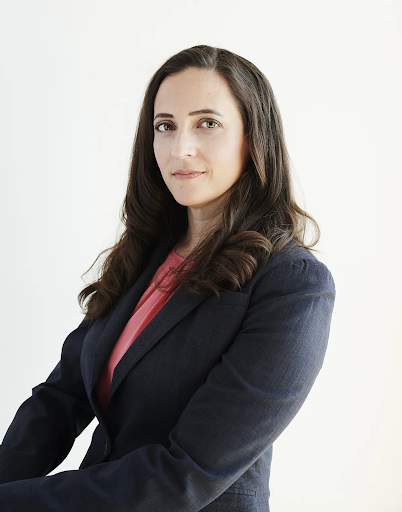
Photo Courtesy of Laura Dunn.
Disclaimer: This article will discuss sensitive topics, including sexual assault, gender-based violence, and rape.
Pepper spray, rape whistles, and self-defense tools are not uncommon items to find on a college freshman’s school packing list. Products like these have become unfortunate necessities given the prevalence of sexual assault on college campuses. This troubling trend points to the broader issue of gender-based violence and the legal and social aspects that allow for such violence to thrive across the US. In this interview, Content Editor Madeline Senate sits down with civil rights attorney and former NY-12 Congressional candidate Laura Dunn to understand the factors that contribute to gender-based violence and the role of the justice system in protecting victims. Dunn has worked on key legislation, including the Violence Against Women Act (VAWA), founded the nonprofit SurvJustice, where she has defended victims of gender-based violence in court and advocated for victims’ rights, and currently works as a litigator at Bailey Duquette P.C. In 2026, she ran for Congress in New York’s 12th congressional district. In this interview, conducted on March 9, 2026, Dunn discusses gender-based violence on college campuses, her work to empower victims, and her political aspirations. This interview explores how rape culture has evolved over time, the impact of the Trump administration, and the implications of the Epstein files on sexual violence today.
Note: This interview was filmed before the Democratic Primary election on March 9, 2026. Laura Dunn is no longer in the running for New York’s 12th Congressional District, yet she continues her advocacy work to support survivors of sexual violence.
Madeline Senate (MS): You’re currently running for Congress in New York’s 12th Congressional District, and you have a long history of advocating for women’s rights and empowering survivors of sexual assault. Specifically, you worked on Section 304 of the Violence Against Women Act, which regulates the policies of universities in response to reports of sexual assault. What drew you to this issue, and why did you choose to focus on the issue of sexual assault and domestic violence in the context of college campuses?
Laura Dunn (LD): Unfortunately, I came to this issue because of a personal experience. I am one of the statistics of women that have been sexually violated on a college campus. As a freshman, two men on my crew team made a decision to sexually assault me when I was drinking and too intoxicated to consent. It changed my life irreparably. Like so many survivors, I thought I should be ashamed and I blamed myself.
I realized over time, with education from amazing campus advocates, that alcohol can facilitate sexual assault and that I [could] still report. I could even report under Title IX, not just to law enforcement. I had no idea until I was educated about that on campus. Then I realized that every single best friend I had in college had also been sexually assaulted, either right before they went to college or right after.
I realized that this was a systemic issue and it wasn’t just me, and that helped empower me to speak out. When I learned that 80% of sexual assaults aren’t even reported, I decided [that] I needed to report mine because nothing changes if we choose to stay the same. I wanted to report and take action.
Ever since taking that action for myself, I have continued to take that action for others by advocating for changes to local law, state law, federal law, and whatever is necessary to help victims of gender violence.
MS: As you have discussed, sexual assault on college campuses is extremely prevalent, with 1 in 5 women experiencing sexual assault while in college. This is three times the average for all women. How can we understand why college students are particularly at risk?
LD: If you even break down the statistics further, you’ll see that college freshmen and sophomores are the most at risk in the female population. Transgender and gender nonconforming students actually have the highest rates of gender violence, and that is consistent throughout time.
When you know those differences, you can see that there’s something about being new to a campus—maybe inexperience, so you don’t know which communities are safe to hang out with—that creates vulnerabilities. Every college campus has different risks, but some colleges have significant Greek life [where] assaults are happening. There are some [communities] that really glorify it, like men’s sports in particular. There are high rates of sexual violence in those settings.
Certain campuses also have certain rates. We know that campuses like Tulane University in New Orleans have rates [of] up to 40% of women being sexually violated in college, which is exceedingly high. Also, we know that some campuses have rates as low as 17%. So we’re seeing all these ranges and [that means] we need more research.
The Obama administration put a lot of time and money into understanding this better and was trying to address it. We got interrupted by the Trump administration [which] has no interest in researching these things. There’s something about college norms and cultures on campus that are facilitating these assaults [against] women.
In general, transgender and gender non-conforming individuals, just because they are “transgressing the norms” that most in society hold, are at risk throughout their careers—not just in college, but even in graduate school. We see the numbers stay the same. So, different populations are being affected for different reasons.
MS: In recent years, with social movements such as the #MeToo movement, topics like consent, victim blaming, and rape culture have become much more widely discussed. In your experience, has this actually affected rape culture? How have social attitudes towards sexual assault changed over the past decade?
LD: When I started, there was no #MeToo movement, and I knew how bad it was then. I’ve been able, as an attorney, to see what impact the #MeToo movement actually had. The number one thing it did was increase social support for survivors. I saw parents believing their children more, sororities believing their sorority sisters more, and communities rallying around survivors, not just perpetrators.
However, it’s still a bit of a mixed bag. People have a hard time understanding that men, somewhere, are committing this violence because [the perpetrators] are over 90% men. That’s really hard psychologically for people to understand and accept.
But, the support for survivors—for them speaking out and actually seeking justice—has increased significantly. It’s not this rare thing for someone to report anymore. It’s actually becoming normal, which is great.
MS: As you were saying, it’s becoming more common to report instances of sexual violence, yet it is still estimated that only around 20% of sexual assault cases are reported to law enforcement. You founded your own law firm in 2019 focused on Title IX campus cases and protecting victims of sexual assault. For sexual assault survivors, what challenges does the current legal system present?
LD: If you look at the statistics, women who are college-aged but outside of educational institutions actually report higher rates [of sexual violence] than people on campuses. It’s almost 33% in the general community, but down to around 20% on a college campus.
That’s reflective of a few things. One, it’s obviously a smaller subsection of our society, and I think people really worry, “What is the impact of my report?” if they’re part of Greek life, if student clubs, athletics, [and] maybe reporting someone on their team or in their group. That creates a lot of social chaos.
Some people choose not to report because they just want the normal college experience. It’s really important that colleges facilitate reports and make sure that there’s confidentiality and privacy for reports. People who are not involved in the actual incident, but are friends with people involved, need to not take sides because that creates a lot of tension which discourages people from coming forward.
We know that there’s something unique to college campuses that makes it harder to report. There are logical reasons that people choose not to report crimes of a sexual nature. One, you have to talk about something very intimate. Some people are raised in cultures where you don’t talk about those things, so one thing I always do as a lawyer is empower people. You have to be able to describe anatomy objectively and to say the words of what was done. I hope we get to a place with our criminal laws where it becomes less about the specificity of the acts and more about the overall picture of how someone is harmed because that reduces the burden and creates more accessibility for people who are uncomfortable talking about intimate issues.
I also know that people come from certain communities that have been overpoliced and brutalized by law enforcement, and there’s a lack of trust. Why would you come forward with a report to law enforcement if you’ve only seen them discriminate, harass, and violate your communities? There needs to be much more effort, not just by law enforcement but also by administrations, to reach out to marginalized communities and say: “You’re safe and welcome to report here, we encourage it, and we’ll handle this discreetly.”
Last but not least, there is a population of people who, for one reason or another, don’t know if it’s “serious enough.” That has to do with the devaluing of women, and girls in particular, [and] other survivors as well. When we say that sexual violence only affects women, it makes it harder for men to report.
Women are often harassed by other women: “Why didn’t you stop it? Why didn’t you do anything?” So, we need to create communities that understand that sexual violence can happen to anyone. [Survivors are not] responsible for it, and when it does happen, we all do care. Everything is serious enough to report because a minor offense [now] may mean a major offense by that perpetrator down the line. Every report does matter.
MS: In addition to working as a legislator, you have also served as an expert witness on numerous legal cases. For example, you were an expert witness and consultant for the lawsuit on the murder of college student Lauren McCluskey by her ex-boyfriend, even after McCluskey made reports to the police. Do you believe that stories like these can spark tangible legal reform?
LD: Absolutely. I have a whole law article arguing for that exact point. Lauren McCluskey’s life could have been saved. She had an individual who had lied to her, pretended to be someone else, and was clearly a dangerous criminal. He was allowed to come onto campus over and over. Campuses can stop people from entering them: there are no trespass orders, there are no-contact orders, there are even protective orders from courts. The university needed to realize that this was an abusive situation. [They had to] support the survivor, give resources that are necessary, and then enforce these orders, keeping that dangerous individual off campus.
These stories are really painful. I also worked on the Jerry Sandusky case, where adult men had seen young children being sexually harmed—or at least heard it—and did nothing. Colleges really need to create a culture of, “You are welcome to report a sexual assault. You’re actually encouraged to report it. You’re a hero if you do so, and you’re not a hero if you keep it silent.” There are cultures—and Columbia University is part of that—where sexual assault has historically been [swept] under the rug, and they need to really disown that and create a new culture.
MS: This case was also widely reported on in the media. What role would you say the media plays in sharing stories like these and affecting reform?
LD: Media has been the number one tool in my entire legal career. When journalists cover stories, people learn from those experiences and understand what can be done better. Interviewing experts, and seeing how a campus could have responded better, is helpful information for all the other schools saying, “We don’t want anyone to lose their life on our campus.” So, journalism is deeply important. Freedom of the press is part of our First Amendment, and we know that the economic conditions around journalism are making it very hard to tell these stories. I hope that you guys keep fighting to tell them, because that’s the only way things change.
MS: Focusing on digital media, we’ve also seen new technologies like artificial intelligence enable new forms of gender based violence. Sharing explicit images without consent has been a long standing issue, but with AI, it is also possible to create these non-consensual explicit images. The TAKE IT DOWN Act was passed last year in Congress to criminalize the creation of such images, and the DEFIANCE Act is currently in Congress, which would allow for victims to sue those who create non-consensual AI deepfakes. With the rapid development of AI, how has your work in both law and advocacy evolved to address these growing concerns?
LD: Unfortunately, I think a lot of K-12s, and even some colleges, don’t realize that sexual harassment and abuse is becoming digital. They keep training on classic physical sexual assault and physical sexual harassment, and aren’t training on what do we do if there are images, either being generated or even [being] consensually taken but nonconsensually shared. There’s a lot of online harassment and sexual abuse that’s occurring, and colleges don’t recognize that, sometimes, as falling under Title IX.
I have a case right now in Maryland where someone was catfished. He was one of several members of a male basketball team that got messages from someone pretending to be a woman. When they sent sexual images back to her, they revealed they were not that person. They were going to blackmail them and use those images in ways that they did not want unless they comply with different acts. We had numerous men being sexually abused, and the entire campus didn’t realize that this fell under Title IX and needed to be addressed. These are forms of sexual harassment and assault, and they do need to be taken seriously. To your point, we need laws that empower people to sue and take action.
But what’s really missing from the conversation is Section 230 of the Communications Act, which currently protects all the big tech companies that create the platforms for these images. There’s no standard of how you upload those images, and we should have some standards and guidelines. There has been the whole thought of, “This is free speech. Don’t regulate it. Let it happen.” Well, sharing child sex abuse images is not free speech, nor is harassing people and creating non-consensual images, nor sharing those images that you’ve consensually taken in non-consensual ways. We need to create liability, just like we have for newspapers. We need to stop Big Tech from letting individuals publish that information on their platforms. So much needs to be done. It starts with awareness, and it ends with good policies.
MS: The acts that we were talking about earlier, the TAKE IT DOWN Act and the DEFIANCE Act, are more targeted towards victims of AI deepfakes and sexual violence in digital spaces. What legal reforms do you believe need to be implemented in order to regulate the AI or social media companies who are producing these images and sharing them?
LD: Those acts really target the perpetration as well as prevent [future] perpetration. TAKE IT DOWN is to stop sharing these images, and it gives a directive, but Section 230 still protects the Big Tech companies from having published it in the first place. We want incentives for them never to have promoted it, because we all know that once it goes out, it’s out forever. It doesn’t mean someone hasn’t copied it, saved it, reposted it. The minute [it] gets out, the damage is exponential, so we need to have liability on the front end.
MS: On the release of the Epstein files, what responsibility do you believe universities have in holding accountable members of their boards, professors, or anyone who might have been involved?
LD: A demand for 100% resignation is required. We know that anyone who was in Epstein’s circles was aware and visually could see underage girls at parties and at events. I don’t buy this line that people didn’t know what was happening. Several people have admitted they did know, and looked the other way. Those people are disqualified from educational settings.
You’re protecting students here. Your job is to sound the alarm when something’s wrong. There needs to be an effort to clear out anyone associated with that. I really hope the students call for that, and that the administration has the moral courage to do so.
Laura Dunn shares how her experience as a survivor has empowered her work defending and advocating for other survivors of gender based violence. She examines the specific aspects of college campuses that leave students vulnerable to sexual violence and the legal and social challenges that prevent survivors from seeking justice. Although progress has been made through legislation to protect victims against digital forms of abuse and through social movements like #MeToo, rates of sexual assault remain high. If perpetrators of gender-based violence are not held accountable now, the culture that forces victims to remain silent will never change. Especially with the release of the Epstein files, Dunn calls for perpetrators everywhere to be held responsible for their actions. Although Dunn is no longer in the Congressional race, she will continue her work to protect and defend survivors of gender based violence.
Madeline Senate (CC ’29) is a Content Editor at the Columbia Political Review majoring in Political Science on the Pre-Law track. You can contact Madeline at ms7430@columbia.edu