Fear Over Fact: How Sensational Media Fueled Trump’s Path to Power
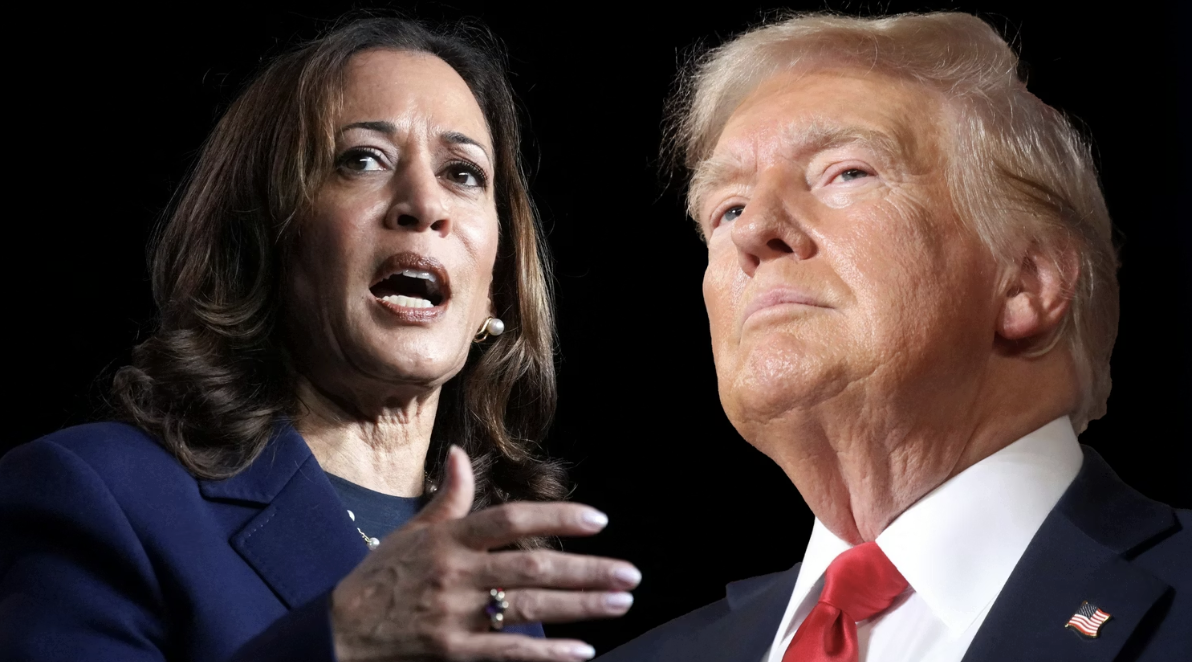
Kamala Harris and Donald Trump clash over opposing views for the nation's future.
“They’re eating the dogs… they’re eating the cats” - Donald Trump
The 2024 presidential debate between Kamala Harris and Donald Trump was messy, to say the least. With outlandish remarks like this one from Trump overshadowing any real talk on policies, little was accomplished. According to Trump, Harris had “no idea what a good economy is,” raised money to “get criminals who burned down Minneapolis out of jail,” and largely helped fuel the Russia-Ukraine War, to name a few of his claims. Both candidates lost their composure as they quarreled, rather than debated. After every point, Trump would attempt to one-up Harris with a crazier, more catastrophic point. Harris says Trump is bringing billionaire tax cuts? Well, he counters that she is destroying the economy with her inflationary policies. No matter how it was framed, Trump stuck to the idea that a Harris presidency would mean the death of America.
This didn’t just end at the debate, though. Trump told a group of rural Pennsylvanian farmers soon after, “If I lose elections, you will not have a farm very long.” He further stated in a Fox News interview that “migrants are totally destroying our county.” Every speech, debate response, and social media post was crafted using the same strategy: fear.
Trump’s decision to center his campaign around fearmongering certainly didn’t come out of nowhere. As the digital age has made news more and more accessible, there has been an increasing need for stories to stand out. The best way to do that is with alarming, dramatic rhetoric. Making exaggerated headlines and sensationalist language far too common in the news. The increased use of these scare tactics has placed Americans in a heightened state of panic. The Trump administration capitalized on this anxiety, positioning fear-mongering at the forefront of their campaign strategy, tuning out meaningful political discourse, and putting fear above fact in the 2024 election.
The 24-hour news cycle was introduced on June 1, 1980, with the launch of CNN by Ted Turner. A longtime media mogul, Turner believed a non-stop visual presentation of the news would capture the attention of larger audiences. He thought this increased attention towards current events would foster a greater general global understanding and reduce misinformation surrounding world issues. Prior to CNN, the news was only available on a select number of channels and was confined to a limited viewing schedule. But suddenly, the world didn’t have to wait to see the latest stories on television; they were available almost immediately. Realizing they had to compete for readers’ attention, outlets around the world began to transition from distributing news as a public service to distributing it as a means for profit.
In some respects, Turner was right. Following CNN’s founding, the world of digital media exploded, and global attention toward the news increased drastically. Today, roughly 5,000 news articles are published every day in the US alone. His vision for modern media wasn’t entirely realized, though. To avoid getting lost in the mix, outlets will now do just about anything to get the reader to click on their story, including embellishing certain conflicts to make them appear more urgent. Positive trigger words, like “success” or “growth,” decrease consumption rates, so outlets utilize scarier ones, like “awful” or “wrong.” In an average length headline (~15 words), each negative word increases the click-through rate by roughly 2.3%. An article about how “The continued rise in greenhouse gases by large corporations will end the world in thirty years” is far more likely to gain traction than “The upward trend of fossil fuel emissions will continue to negatively impact the environment.” Turner’s main goal had been to capture more viewers’ attention to highlight in-depth, fact-based news coverage. Yet, the implementation of his ambitions has inadvertently created an environment in which appealing to audiences is more important than the actual story.
This negativity bias has created a vicious cycle of “doomsday rhetoric” in the news. As people consume frightening media, and as increasingly negative articles are published, the world becomes more afraid. This state of fear has been exacerbated in the past few years, especially by the COVID-19 pandemic. The uncertainty and anxiety posed during the pandemic sparked panic across the world. False information and exaggeration spread like wildfire. Post-COVID, sensationalized news is no longer a tactic to increase click-through rate; it’s a media norm.
Fear has long been used as a tactic in politics. Candidates have always warned voters about the dangers of electing their opponents, but these cautions are generally followed by a description of their own plans and policies. Take the first 2004 presidential debate: Senator John Kerry criticized President George W. Bush’s handling of nuclear proliferation: “The president has had four years to try to do something about [nuclear weapons], and North Korea has got more weapons; Iran is moving towards weapons. And at his pace, it will take 13 years to secure those weapons in Russia. I’m going to do it in four years, and I’m going to immediately set out to have bilateral talks with North Korea.” Kerry explained his perceived dangers of voting for Bush, but did not but did not imply the world would end if citizens did. He then followed it with a general idea of his approach to the problem: to negotiate with North Korea alongside China to gain possession of said weapons. Fear was a component of campaigns, but it wasn’t a key strategy. Trump, though, put fearmongering at the center of his agenda. He framed every move Biden made during his four years in office as detrimental to the US He made Kamala Harris out to be a villain set on destroying the country. At a September 2024 rally in Las Vegas, he remarked that “You’re pretty close to not having [a country]. You better hope I get elected.” This negativity in the news made it all too easy for Trump to scare the country into electing him. Rather than truly addressing anyone’s concerns for the country, he continued to instill fear into voters until he was sitting in the Oval Office.
In his first 10 months as president, Trump claimed to have lowered average gasoline prices to almost $2/gal, stopped seven wars, and largely improved social security (all of which are, to some extent, untrue). In such uncertain times, it can be easier to believe the lies President Trump is perpetuating than to face the harsher reality that the country is in a difficult position Regardless of how bleak they may be, though, it’s time to face the facts: this administration is not serving the nation as it claimed it would. Though Trump won’t be running again, the Republican Party may employ a similar strategy in their 2028 campaign. Americans need to ensure they have a clear understanding of both sides’ agendas and avoid falling victim to the same scare tactics. Democracy relies upon voters making educated choices when choosing to support a candidate. When that space for that discourse is filled with threats of impending doom, democracy dies.
Addison Page (BC ‘29) is a staff writer at CPR studying political science. She is interested in the intersection of race, gender, and economic inequality as well as modern political polarization. She can be reached at anp2175@barnard.edu