The SAVE Act Will not Save American Democracy
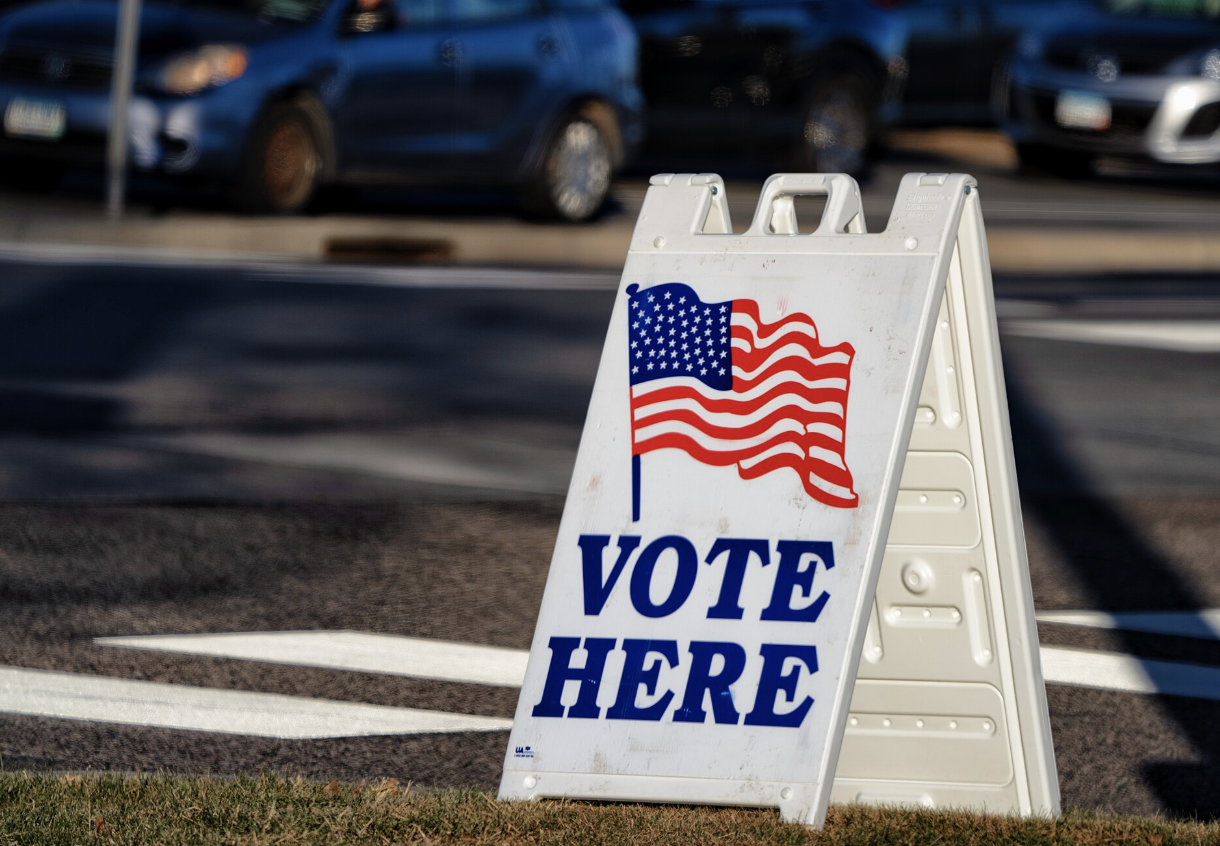
Close 'Vote Here' sign outside an election polling place at Woodbury City Hall in Woodbury, Minnesota, during the 2020 general election, on November 3, 2020. Photo courtesy of Tony Webster.
.jpg)
The shocking political events since the start of President Trump’s second term have left Democrats feeling hopeful about the midterm elections. With the changing political climate in DC and new redistricting following SCOTUS decisions, there has been significant electoral movement toward Democrats this year. However, a bill in the Senate chamber could change how the entire country conducts elections. The creation and discussion surrounding the Safeguard American Voter Eligibility Act, or SAVE Act, provide voters with a justification for being discontent with election results, threatening the foundation of American democracy: fair and free elections.
The SAVE Act requires individuals to provide documentary proof of U.S. citizenship when registering to vote in federal elections. This bill was a response to Trump’s continued claims of a stolen 2020 election. It prohibits the use of mail-in ballots and online voter registration, encourages voter purges after voter inactivity, threatens to imprison election workers for missteps, strong-arms states into sharing voter data, and creates extra hurdles to proving citizenship by requiring proof at registration and at the ballot box. Ultimately, if passed, the bill may disenfranchise 21 million Americans. This affects those who cannot register and vote in person, those whose legal name does not match their birth name, and Americans who have difficulty accessing official documents.
Some may assume this bill is a political tool to sustain Republican power in the legislative branch. Trump claimed that he will not sign a single bill until the SAVE Act passes to “secure the midterm elections,” declaring that a triumphant victory in the midterms will prevent the Democrats from winning elections for the next 50 years. Moreover, Republicans have considered eliminating the Senate filibuster to minimize opposition to this bill, which is highly unlikely, as it requires a 60-vote majority in the Senate.
This bill would change how every poll center conducts its future elections, but if the Republicans do not abolish the filibuster, what is the major concern?
The key indicator of a liberal democracy concerns fair and free elections. Meddling with elections to disrupt election results is one of the strongest signs of democratic backsliding. If the Trump administration argues that this bill will “fix” American elections, claims voter fraud in Democrat controlled states, and proclaims that the Democrats continue to cheat in elections, then it achieves its mission to distort facts and ultimately undermine democratic practices—even if the law never passes. The SAVE Act and similar bills are symptoms of American distrust in democracy, paving the way for future autocratic practices. Thus, if the Republicans perform poorly in the midterms, the biggest loser won’t be the Republican Party; it will be American democracy, as voters will have an excuse for why their team did not win.
Democratic backsliding refers to the state-led degradation of political institutions that sustain democracy. Many scholars argue that pivotal elections can determine whether a state pursues democratization or backslides further into autocracy. In the recent 2024 Russian presidential election, Russian authorities denied anti-war candidates registration to run, and the Kremlin shut down independent groups that monitor elections. Following the Russian Duma’s changes to election laws, this election season was an example of repeated changes in rules that seek to diminish political competition. In Turkey, the AKP, the majority party in Turkey’s Grand National Assembly, attempted to stay in power by implementing post-election mechanisms to “reverse and manage” election results, allowing it to hold elections to sustain the regime’s durability and maintain party control.
The issue in comparing the SAVE Act to electoral laws in illiberal democracies such as Russia and Turkey is that it does not solely target Democratic or Republican voters. The Brennan Center for Justice finds that rather than disproportionately impacting the Democratic Party, the SAVE Act affects voters from both parties. Instead, the bill’s true purpose seems to be to reinforce discontent with the electoral system. Whether the SAVE Act passes or not, unfavorable election results will continue to be the reason for voter regulations rather than acknowledging the simple caveat of living in a democracy: you don’t always win.
If the SAVE Act fails to pass and Democrats gain control of Congress in November, the Republicans can point to election fraud as a reason for their party’s loss. This reinforces arguments for the necessity of the SAVE Act, giving voters an excuse to be discontented with the election outcomes. Uncertainty and speculation around election results can create unrest, akin to January 6th, and continued partisan conversations about voter regulation contribute to this behavior. Eventually, repeated discreditation of election results undermines the election’s validity, and people may turn to a bill like the SAVE Act as a solution to a non-issue.
With the stakes that Republicans have set for this bill, and all the national attention that this holds, they can continue to use this narrative to discredit the democratic system itself. By creating an environment in which anyone can question the validity of an election result, the passage of bills like the SAVE Act may become a self-fulfilling prophecy. If this discourse creates a growing need amongst the electorate for legislation like the SAVE Act, voter suppression will become a norm.
A way to combat this is to find more avenues for civic engagement before the midterms. If people know more about the U.S. electoral process, its government institutions, the Constitution, and how representative democracies operate, they may feel less inclined to blame election fraud for losses in a democracy with fair and free elections. If Americans learned how their municipality conducts their elections, they may gain a clearer understanding of the integrity with which elections are conducted to ensure that they are free and fair.
Jordan Jacoel (BC ‘28) is a staff writer studying Political Science.